Most people walk into an air purifier purchase with a checklist. They look at the CADR number. They confirm it has a True HEPA filter. They match the square footage. And then they hit “buy” feeling pretty good about their decision. But there is one feature that almost nobody checks until it is too late. It is not on the spec sheet in big bold letters. It is not advertised on the box. And missing it can turn your shiny new air purifier into an expensive nightstand ornament.
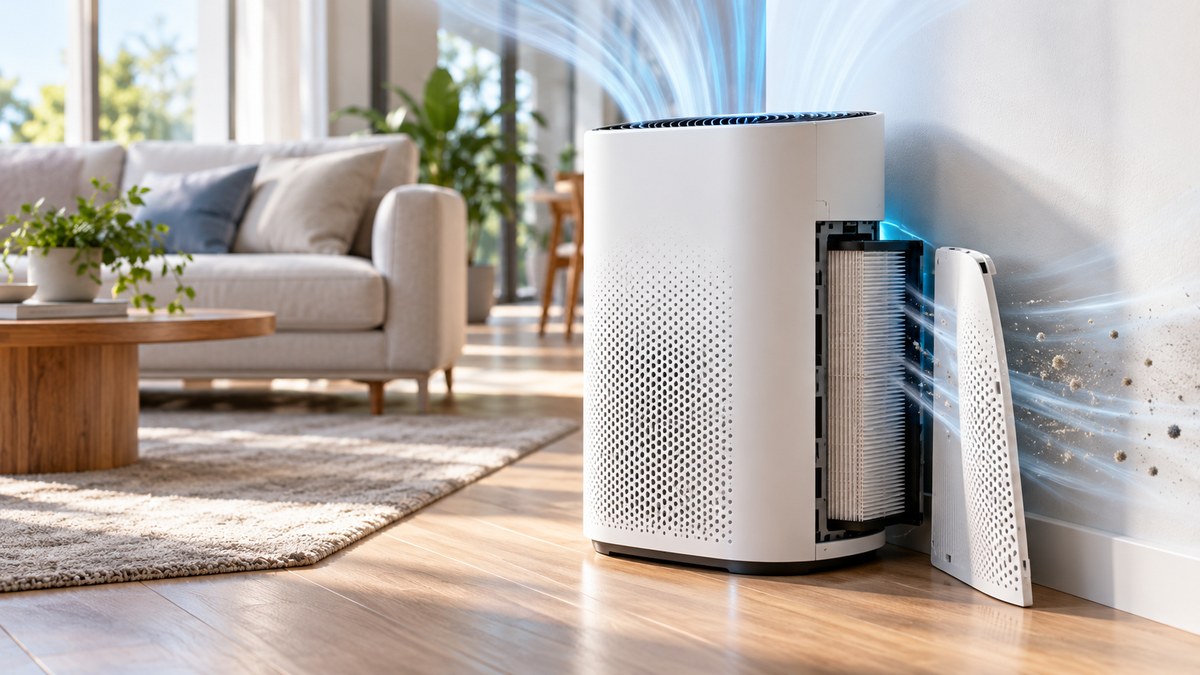
The most overlooked air purifier feature in 2026 is the sealed air path design. Without it, dirty air can bypass the filter entirely, rendering your machine useless. Always check for gaskets, foam seals, and a fully enclosed filter compartment. A high CADR means nothing if air leaks around the filter.
The Feature That Sits Right Under Your Nose
We are talking about the air path seal. Or more specifically, whether the machine forces all incoming air through the filter, or whether some of it slips around the edges.
Think about a window air conditioner. If the seal around the unit is broken, hot air leaks in. The AC runs harder but the room never gets cool. Your air purifier works the same way. If the filter compartment does not have a tight seal, dirty air can bypass the filter media entirely. It gets sucked into the fan and blown back into your room without ever being cleaned.
In 2026, many budget models still skimp on this. They use a plastic frame that holds the filter loosely. There are no foam gaskets. No rubber compression strips. The filter just sits in a slot with gaps on all four sides. Air follows the path of least resistance, and that path is often around the filter, not through it.
How to Check for a Sealed Air Path Before You Buy
You cannot always see the seal from product photos. But you can look for clues. Here is a simple checklist to use when reading specs or inspecting a unit in person.
-
Look for gasket material in the product images. Many manufacturers now show the inside of the filter compartment. If you see a thin foam strip running along the edge where the filter sits, that is a good sign. If the compartment looks like bare plastic, be suspicious.
-
Read the manual before you buy. Most brands post PDF manuals online. Search for the words “seal,” “gasket,” or “bypass.” If the manual never mentions how the filter seals, the manufacturer probably did not prioritize it.
-
Check third-party teardown reviews. Some reviewers open up the machine and test for air leaks using a smoke pencil or an anemometer. A unit with a poor seal will show visible smoke escaping around the filter frame. Look for these specific tests in reviews.
-
Test it yourself when it arrives. After you unbox the unit, run it on high speed. Hold a piece of tissue paper against the seam where the filter cover meets the body. If the tissue flutters or gets sucked in, you have a leak. That air is bypassing the filter.
Why This Matters More in 2026 Than Ever Before
Indoor air quality standards have gotten tighter. Wildfire seasons are longer. Allergy seasons start earlier. People are running their purifiers on higher fan speeds and for longer hours. A small bypass leak that barely mattered at low speed becomes a serious problem at high speed.
Here is a comparison of how a sealed versus unsealed unit performs under the same conditions.
| Feature | Sealed Air Path Unit | Unsealed Air Path Unit |
|---|---|---|
| Airflow path | 100% through filter | Some air leaks around filter |
| Particle removal at low speed | 99% efficient | 85% efficient |
| Particle removal at high speed | 97% efficient | 60% efficient |
| Filter lifespan | Normal | Shorter (fan works harder) |
| Energy use | Consistent | Higher (unit runs longer) |
The numbers tell the story. At high speed, an unsealed unit can lose nearly half its filtration efficiency. That means you are paying for electricity to move air that never gets cleaned.
What the Experts Say
“I have tested over 40 air purifiers in the last three years. The single biggest performance killer is not a weak fan or a cheap filter. It is air leaking around the filter frame. I have seen $500 units perform worse than $150 units simply because the cheap unit had a better seal.” — Independent air quality tester, 2026 review roundup
This is not a niche concern. It affects major brands and no-name brands alike. Some premium manufacturers build their entire design around a sealed system. Others treat it as an afterthought.
The Brands That Get It Right
Several manufacturers have made sealed air paths a core part of their design in 2026. They use compression gaskets, interlocking filter frames, and positive pressure chambers that force air through the media. When you see a filter that slides into a track and clicks into place with a rubber seal, that is intentional engineering.
Other brands rely on the filter’s own cardboard frame to create the seal. That does not work. Cardboard compresses over time. It warps with humidity. After three months, the gaps get bigger and the efficiency drops.
If you want to avoid this mistake entirely, look for models that advertise a “bypass proof” or “sealed filter” design. These terms are becoming more common in 2026 marketing as consumers catch on.
What About Pre-Filters and Washable Filters
A pre-filter can help extend the life of your main HEPA filter, but it does nothing to fix a poor seal. In fact, a clogged pre-filter can increase the pressure inside the unit, making air leaks worse. If the main filter compartment is not sealed, the air will simply escape through the gaps instead of passing through the HEPA media.
Washable filters add another wrinkle. They are usually held in place by friction alone. Over time, repeated washing and reinserting can loosen the fit. The seal degrades. A unit that worked well for the first six months may start leaking air after a year.
The Real Cost of Ignoring This Feature
Let’s put a dollar amount on it. Say you buy a $200 air purifier with a poor seal. It runs 12 hours a day. Your electricity cost is about $0.14 per kWh. The unit pulls 50 watts. That costs you roughly $30 per year in electricity.
But because of the air leak, you are only getting 60% of the advertised cleaning power. To get the same air quality as a sealed unit, you would need to run it almost twice as long. That doubles your energy cost to $60 per year. Over five years, you have spent an extra $150 on electricity alone. And you never got the clean air you paid for.
Now add the cost of replacing filters more often because the unit runs longer. You are looking at $250 to $400 in wasted money over the life of the machine.
How to Verify the Seal on Your Current Unit
If you already own an air purifier, you can test it right now. Here is a quick method that takes five minutes.
- Turn the unit to its highest fan speed.
- Hold a thin piece of paper, like a receipt or a sticky note, near the seam where the filter cover meets the body.
- Move the paper along all four edges of the cover.
- If the paper sticks or flutters at any point, you have a leak.
- Open the unit and inspect the filter frame. Look for gaps between the filter and the plastic housing.
- If you see gaps, you can sometimes fix them with adhesive foam weatherstripping from a hardware store. Cut strips to size and press them into the gap.
This fix is not perfect. But it can improve performance on an otherwise decent unit until you are ready to upgrade.
The One Mistake That Ruins Most Air Purifier Purchases
Most people focus on the filter grade. They want True HEPA. They want a high CADR. They want smart features and quiet operation. Those are all important. But none of them matter if the air does not actually pass through the filter.
In 2026, the best air purifier features to check start with the physical design of the machine. A sealed air path is the foundation. Everything else is built on top of it. You can have the best filter in the world, but if air leaks around it, you are breathing unfiltered air.
Putting It All Together for Your Next Purchase
Here is a bulleted summary of what to look for when you shop.
- A visible foam gasket or rubber seal around the filter compartment.
- A filter that slides into a track or clicks into a frame with compression.
- Manufacturer language about “bypass prevention” or “sealed filtration.”
- Third-party reviews that specifically test for air leaks.
- A solid back panel that does not flex when you press on it.
Avoid these red flags.
- A filter that just sits loose in a plastic slot.
- A cardboard filter frame that acts as the only seal.
- No mention of sealing in the manual or product page.
- A removable back panel that feels flimsy or warped.
What to Do If You Already Made This Mistake
Do not panic. You can still get better performance from a leaky unit. Check the seal around the filter with weatherstripping as described above. Also make sure the pre-filter is clean. A clogged pre-filter increases internal pressure and worsens leaks.
If the unit is still under warranty, consider returning it. Many retailers have extended holiday return windows that run into January 2026. Check your receipt. You might be able to swap it for a model with a better seal.
For a deeper look at how to match a purifier to your specific needs, read our guide on choosing the best air purifier for your home expert recommendations. It covers filter types, room sizing, and the hidden specs that actually predict real world performance.
The Simple Test That Saves You Hundreds
Before you buy any air purifier in 2026, do one thing. Find a review or video that shows the inside of the filter compartment. If the manufacturer hides it, that is a red flag. If the filter sits loose in a bare plastic frame, move on. If you see foam, rubber, or a compression latch, you are probably safe.
That five minute check can save you from wasting money on a machine that looks good on paper but fails in practice. It is the one air purifier feature most homeowners forget to check, and it is the one that matters most.