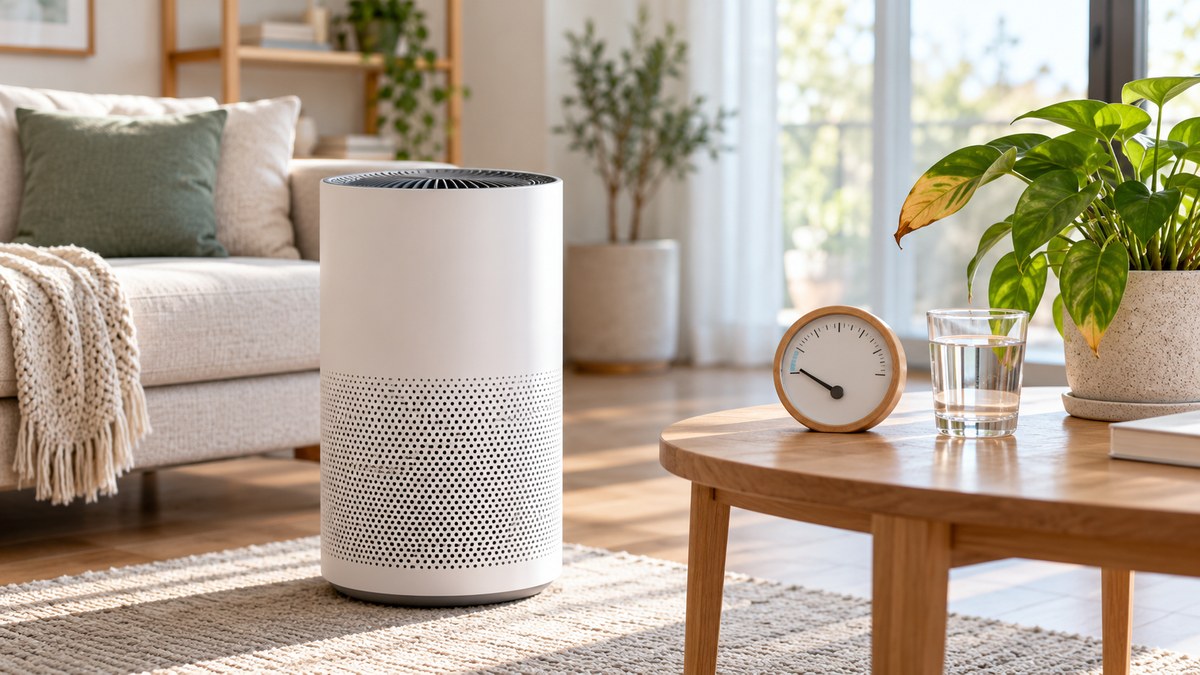
You just bought a new air purifier for your bedroom. The first night, you sleep great. The second night, you wake up with a scratchy throat and dry eyes. You start to wonder: is my air purifier making my home too dry?
It is a common worry. Many homeowners and health conscious people ask the same question. The short answer is no, air purifiers do not dry out the air the way a space heater or a dehumidifier does. But there is a little more to the story. Let us walk through what is really happening and how to keep your indoor air comfortable all year round.
Standard air purifiers do not remove moisture from the air. They filter particles like dust and pollen. Dryness you feel often comes from heating systems, cold weather, or running the purifier on high speed in a sealed room. You can solve this by adding a humidifier or adjusting your home’s ventilation for balanced comfort.
How an air purifier actually works
Most air purifiers use a fan to pull air through a filter. The filter traps pollutants like dust, pet dander, smoke, and pollen. Then the clean air is pushed back into the room. That is the whole process.
The fan moves air around. It does not have a cooling coil or a desiccant material that pulls water vapor out of the air. Unlike a dehumidifier or an air conditioner, a standard HEPA purifier has no mechanism to change the humidity level.
So if the machine is not removing water, why does your throat feel dry?
The real reason you feel dry air
The sensation of dryness often comes from air movement. When a purifier runs on a high fan speed, it creates a constant breeze. That moving air evaporates moisture from your skin and eyes faster than still air would. You feel the effect even if the actual humidity in the room has not changed.
Cold weather plays a big role too. In winter, cold air holds less moisture. When that cold air leaks into your home and gets heated, its relative humidity drops. Your furnace is the real culprit, not the air purifier. If you run the purifier at the same time, you might blame the wrong appliance.
Here are the most common factors that cause dry indoor air:
- Heating systems (furnace, space heaters, radiators)
- Cold outdoor air with low moisture content
- Running an air purifier on high speed near where you sit or sleep
- Poor home insulation that lets dry air in
- Overuse of exhaust fans in bathrooms and kitchens
Can an air purifier ever lower humidity?
There is one exception. Some air purifiers use a technology called electrostatic precipitation or ionizers. These units create a small amount of ozone as a byproduct. Ozone can react with certain compounds in the air, but it does not remove water vapor. The impact on humidity is zero.
A few high end purifiers include a built in dehumidifier function. Those are combination units. They are designed to dry the air. But a standard HEPA purifier or a carbon filter unit will not lower your humidity.
If you want to be sure about your specific model, check the product manual. Look for terms like “dehumidifier” or “moisture removal.” If you do not see those words, your purifier is not drying the air.
How to tell if your home is actually too dry
Before you change anything, measure your humidity. A simple hygrometer costs less than fifteen dollars at a hardware store. Place it in the same room as your air purifier and check the reading.
Ideal indoor humidity levels:
| Condition | Relative Humidity | What it feels like |
|---|---|---|
| Too dry | Below 30% | Dry skin, static shock, scratchy throat |
| Comfortable | 30% to 50% | Balanced, fresh feeling |
| Too humid | Above 60% | Sticky, musty, risk of mold |
If your reading is below 30%, your home is dry. The air purifier is not the cause, but it might be making the feeling worse by moving that dry air around.
What you can do to fix dry air at home
You do not have to choose between clean air and comfortable air. You can have both. Here is a practical plan to balance humidity without losing filtration benefits.
-
Add a humidifier to the room. A cool mist humidifier works well alongside an air purifier. Place the humidifier on the opposite side of the room so the purifier does not pull in the mist directly. This keeps the humidity level stable without over saturating the filter.
-
Run the purifier on a lower speed. You do not always need the highest setting. Most purifiers clean the air effectively on medium speed. Lower fan speed means less air movement across your skin, which reduces that dry feeling.
-
Seal drafts around windows and doors. Weather stripping and caulk stop dry outdoor air from sneaking in. This helps your humidifier and your purifier work more efficiently.
-
Use a programmable thermostat. Set your heat a few degrees lower at night. Cooler air holds more relative humidity. You will sleep better and wake up with less dryness.
-
Check your filter regularly. A clogged filter forces the fan to work harder. That increases air speed and noise. Replace or clean the pre filter every three months. A clean filter moves air more gently.
“The biggest myth I hear is that air purifiers suck moisture out of a room. They do not. The dryness people feel is usually from their heating system or from the purifier’s fan creating a draft. A simple humidity gauge will confirm the real story.” – Indoor air quality specialist, EPA Indoor Environments Division
When to use a dehumidifier instead
If your home feels dry, you do not need a dehumidifier. That would make things worse. But if you live in a humid climate and run an air purifier, you might notice the opposite problem. High humidity can make the room feel stuffy. In that case, a dehumidifier helps.
For the best results, understand what each machine does:
- Air purifier: removes particles from the air
- Humidifier: adds moisture to the air
- Dehumidifier: removes moisture from the air
- Air conditioner: cools and removes some moisture
Choose based on your specific comfort needs. A good rule of thumb: if your hygrometer reads above 60%, use a dehumidifier. If it reads below 30%, use a humidifier.
Matching your purifier to your room size
Another factor that affects comfort is whether your purifier is too powerful for the space. An oversized purifier cycles the air too often. That constant air movement can make a small room feel drafty.
Check the CADR rating on your purifier. CADR stands for Clean Air Delivery Rate. It tells you how many cubic feet of air the unit cleans per minute. A good match is a CADR that is about two thirds of your room’s square footage. For example, a 200 square foot room works well with a purifier rated around 130 CFM.
If your room feels dry, try a smaller unit or a lower speed. You can also use our guide on how to calculate the right air purifier size for every room in your home to find the perfect fit.
Common mistakes that make dryness worse
Many people accidentally make their homes drier without realizing it. Here are the most frequent errors and how to avoid them.
| Mistake | Why it hurts | Better approach |
|---|---|---|
| Running the purifier on max 24/7 | Creates constant draft | Use auto mode or lower speed at night |
| Placing the purifier right next to your bed | Blows dry air on your face | Move it at least three feet away |
| Skipping a humidifier in winter | No moisture added back | Add a small cool mist unit |
| Sealing the room completely | No fresh air exchange | Crack a window for five minutes daily |
| Ignoring the filter change light | Reduced airflow, louder fan | Check filters monthly |
A simple routine for balanced indoor air
You do not need a complicated system. Just follow this routine to keep your air both clean and comfortable.
- Morning: Open a window for five minutes to let stale air out
- Daytime: Run the purifier on medium speed
- Evening: Check the hygrometer reading
- Night: If humidity is below 30%, turn on a humidifier
- Weekly: Vacuum around the purifier intake vents
This keeps your home fresh without over drying the space.
Final thoughts on air purifiers and dryness
If you have been asking yourself do air purifiers dry out the air, you can put that worry to rest. The machine itself does not remove moisture. The dry feeling comes from air movement, heating systems, or seasonal weather changes. The good news is that you can fix it easily with a humidifier or by adjusting your fan speed.
Your air purifier is still doing its job. It is removing allergens, dust, and pollutants that affect your health. Keep running it. Just add a little moisture back into the room and you will enjoy the best of both worlds: clean air and comfortable air.
For more tips on creating a healthy living space, check out our guide on improve indoor air quality with simple tips for a healthier home. You can also learn about top strategies for maintaining a fresh and healthy indoor environment to keep your whole home feeling great.
Take a few minutes to measure your humidity tonight. You might be surprised at how easy it is to fix that dry feeling. Your nose, skin, and sleep will thank you.