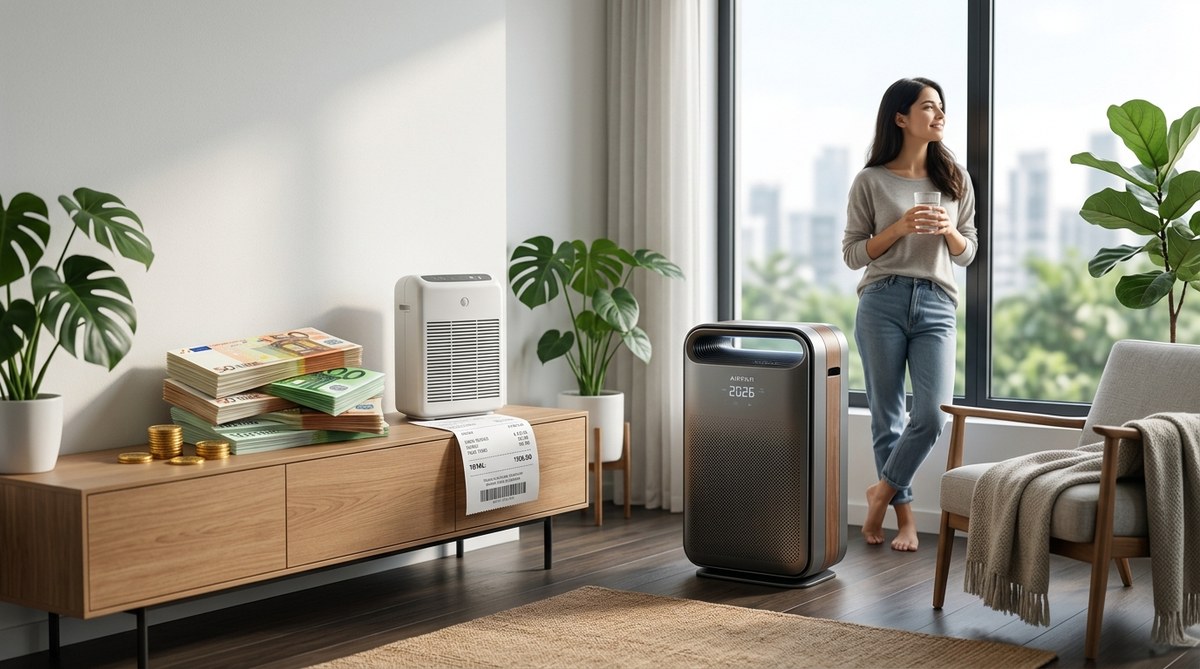
You are looking at a $1,200 air purifier online. Your finger hovers over the buy button. Then you see a model that looks almost identical for $150. Both claim to clean your air. Both have HEPA filters. Why does one cost eight times more? That gap in price is confusing, and it is the reason most people hesitate before buying. The truth is that expensive air purifiers are worth it in some situations, but they are a waste of money in others. The key is knowing which situation applies to your home.
Expensive air purifiers are not always better. You pay a premium for higher CADR ratings, longer filter life, quieter operation, and smart features. For most homes, a mid-range model under $300 cleans the air just as effectively as a $1,000 unit. The real value comes from matching the machine to your room size and specific pollution concerns. A costly mistake is buying a unit that is too small for your space, regardless of the price tag.
What you actually pay for in a premium air purifier
When you spend more than $500 on an air purifier, you are not just paying for the ability to remove dust. You are paying for engineering that most budget models skip.
The biggest difference is the CADR rating. That stands for Clean Air Delivery Rate. It measures how many cubic feet of air the machine can clean per minute. A premium unit might have a CADR of 300 or higher. A cheap unit might struggle at 100. That matters a lot if you have a large living room or open floor plan.
You also pay for better build quality. Premium models use thicker steel or high-grade plastic. They have sealed systems that prevent air from leaking around the filter. Budget models often leak, which means some air bypasses the filter entirely. That defeats the whole purpose.
Then there is noise. A loud fan running all night can ruin your sleep. Expensive purifiers use better motors and aerodynamic designs to move air quietly. Some premium units run at under 25 decibels on low speed. That is quieter than a whisper.
The hidden costs that eat your budget
Here is where things get tricky. The purchase price is only half the story. You also have to pay for filters.
| Price Category | Typical Unit Cost | Annual Filter Cost | Filter Life |
|---|---|---|---|
| Budget (under $150) | $80 – $140 | $60 – $100 | 3 – 6 months |
| Mid-range ($150 – $400) | $200 – $350 | $40 – $80 | 6 – 12 months |
| Premium ($400+) | $500 – $1,200 | $80 – $200 | 6 – 12 months |
Notice something in that table. Mid-range models often have the lowest annual filter costs. Some premium brands lock you into expensive proprietary filters that cost $120 a pop. A budget model might seem cheap upfront, but replacing filters every three months adds up fast.
“The most expensive air purifier is the one you stop using because you cannot afford the replacement filters.” — Air quality technician with 15 years of field experience.
When spending more actually makes sense
There are three clear scenarios where a higher price tag pays off.
1. You have severe allergies or asthma. If pollen, mold spores, or pet dander trigger your symptoms, you need a machine that can filter the air multiple times per hour. A higher CADR rating means faster relief. Premium units also tend to have better pre-filters that catch large particles before they clog the main HEPA filter. That extends the life of the expensive filter.
2. You live in an area with frequent wildfires. Wildfire smoke contains ultra-fine particles down to PM1 and smaller. Many budget air purifiers do not list their PM1 CADR. Premium models often do, and they score higher. If you live in California, Oregon, or Washington, this matters during smoke season.
3. You want the machine to run 24/7 without annoying you. Cheaper units are louder. They have harsher fan tones. They might have bright LED lights that cannot be dimmed. If you are sensitive to noise or light while sleeping, a premium quiet model is worth the extra cost.
Where you can save money without sacrificing performance
Most people do not need a $1,000 air purifier. Here is where you can cut costs.
- Skip the smart features. Wi-Fi connectivity and app control are nice, but they do not clean the air. If you are on a budget, a manual unit with a simple knob works fine.
- Ignore ionization and UV-C lights. These add-ons sound impressive but rarely make a measurable difference in a home setting. A good HEPA filter does all the heavy lifting.
- Buy a slightly larger unit for a small room. A mid-range purifier rated for 500 square feet running on low speed in a 200-square-foot bedroom will be quieter and last longer than a small unit running at max speed.
A simple process to find your sweet spot
Follow these steps to avoid overpaying.
- Measure your room. Calculate the square footage. Multiply by 2 to get the minimum CADR you need. That is the number of air changes per hour.
- Look up CADR ratings for models in your budget. Ignore marketing claims. Stick to the official AHAM-verified CADR numbers.
- Check the annual filter cost. Divide the filter price by the number of months it lasts. Multiply by 12. That is your yearly expense.
- Add the unit price and three years of filter costs. Compare that total across models. The cheapest option over three years is often a mid-range unit.
Common mistakes that cost you money
- Buying a unit that is too small. A small purifier running at full blast is loud and wears out faster. It also cleans less air than a properly sized unit running at medium speed.
- Ignoring filter replacement schedules. Running a clogged filter damages the motor and blows dirty air back into the room. Set a calendar reminder.
- Chasing brand names. Some premium brands charge double for the same components found in generic units. Look at the specs, not the logo.
- Placing the purifier in a corner. Air needs space to circulate. Keep it at least 12 inches from walls and furniture.
For a deeper look at how to pick the right model for your home, check out our guide on choosing the best air purifier for your home expert recommendations. It walks through specific models at different price points.
The real verdict for 2026
Air purifier technology has not changed dramatically in the last few years. A HEPA filter from 2020 works the same way as one from 2026. The difference is in the fan, the build quality, and the extra features.
For most people, the smart money is on a mid-range model from a reputable brand. Spend between $200 and $350. Make sure the CADR matches your room size. Check that replacement filters are readily available and reasonably priced. That combination gives you clean air without breaking the bank.
If you have specific health concerns or live in a high-pollution area, then yes, an expensive air purifier is worth it. Otherwise, save your money and put it toward something that actually improves your life.
Making your final decision with confidence
You now have the framework to evaluate any air purifier on the market. Look at the CADR, the filter cost, and the noise level. Ignore the flashy features. Match the machine to your room. If you follow that simple formula, you will get clean air without wasting a dime. That is the real cost of clean air, and it is much lower than the sticker price suggests.
For more practical advice on keeping your indoor environment healthy, read our article on top strategies for maintaining a fresh and healthy indoor environment. It covers humidity control, ventilation, and other factors that work alongside your air purifier.