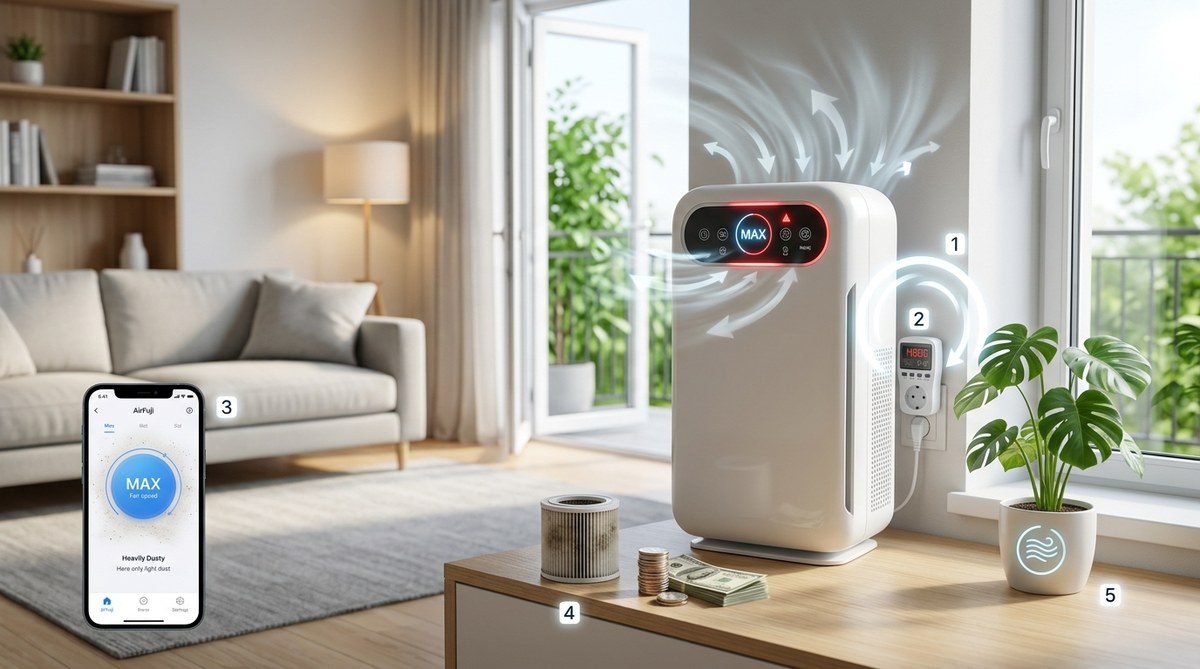
You bought an air purifier to breathe easier, not to burn through your budget. But if you have ever looked at your electric bill or replaced a filter that cost as much as a nice dinner out, you have probably asked yourself a tough question: are air purifiers a waste of money? It is a fair question. The market is flooded with devices that promise fresh, clean air, and some of them deliver. Others just sit in the corner, humming away, eating electricity, and collecting dust. In 2026, with energy costs still top of mind for most households, you need to know if that box in your living room is a smart investment or a monthly drain. Let us cut through the marketing and look at the real numbers, the common mistakes, and the simple ways to make sure your air purifier earns its keep.
Air purifiers are not a waste of money when used correctly, but most people lose cash on hidden costs like oversized units, unnecessary filter replacements, and running the fan on max 24/7. The secret is matching the device to your room size, using auto mode or a timer, and sticking to a smart filter schedule. Done right, an air purifier pays for itself in better sleep, fewer allergy symptoms, and less dusting.
The Real Cost of Breathing Clean
Let us start with the numbers. A typical mid-range air purifier costs between $100 and $300 upfront. Replacement filters run anywhere from $30 to $80, and you usually swap them every six to twelve months. Then there is the electricity. Most units use about the same power as a light bulb, between 30 and 80 watts on medium speed. If you run it 24/7, that adds roughly $3 to $8 a month to your electric bill, depending on your local rates.
Add it up, and the first year of ownership can cost between $200 and $500. That is real money. But here is the thing: that cost is optional if you are not getting value. The real waste happens when you buy the wrong machine or run it the wrong way.
Three Ways You Might Be Wasting Money Right Now
Most people do not realize they are making these mistakes. Check your habits against this list.
-
Running it on turbo mode constantly. High fan speed uses the most electricity and wears out filters faster. It also creates noise that makes you want to turn the unit off. Use turbo only when you need it, like after cooking or during a high pollen day.
-
Replacing filters on a strict calendar schedule. Many manufacturers say change the filter every three months. That is often too soon. If you live in a cleaner area or run the purifier less often, the filter might last twice as long. Check it visually. If it looks clean, leave it in.
-
Putting the purifier in a corner or behind furniture. Air needs to flow freely. Blocked intake vents make the fan work harder, drawing more power and reducing cleaning efficiency. Give your unit at least two feet of clearance on all sides.
When an Air Purifier Actually Saves You Money
It sounds backwards, but a good air purifier can save you cash. How? By reducing dust and pet dander in your home, you clean less often. That means fewer cleaning supplies, less wear on your vacuum, and more time. For allergy sufferers, fewer symptoms can mean less money spent on tissues, antihistamines, and doctor visits. Over a year, those savings add up.
“I tell my patients that if they have seasonal allergies or asthma, a properly sized HEPA purifier in the bedroom can reduce their need for daily medication by up to 30 percent. That is not just healthier, it is cheaper.” Dr. Amelia Torres, family medicine physician in Portland, Oregon.
The Settings That Drain Your Wallet
We covered some of this in our guide on 5 air purifier settings that are wasting your money every month, but here is a quick reference table so you can spot the costly habits at a glance.
| Mistake | Why It Costs You | Better Approach |
|---|---|---|
| Running on high 24/7 | Higher electric bill, faster filter wear | Use auto mode or a timer |
| Replacing filters too early | Unnecessary $40 to $80 expense | Check filter monthly; replace when visibly dirty |
| Using a unit that is too big for the room | Higher upfront cost, more energy use | Match CADR rating to room square footage |
| Placing it in a dead zone (corner, behind couch) | Poor air circulation, unit runs longer | Center it in the room, away from walls |
| Ignoring pre-filter cleaning | Main filter clogs faster, needs early replacement | Vacuum or wash pre-filter every two weeks |
How to Choose a Model That Pays You Back
If you are still shopping, or thinking about upgrading, focus on these features. They separate a good investment from a money pit.
-
Look for a CADR rating that matches your room. CADR stands for Clean Air Delivery Rate. For a 300 square foot room, you want a CADR of at least 200 for smoke, pollen, and dust. Oversizing wastes money. Undersizing wastes your time because the air never gets clean.
-
Skip the fancy extras you do not need. Ionizers, UV lights, and smart app connectivity sound cool but add cost and complexity. A simple HEPA filter with a carbon pre-filter handles 99 percent of common indoor pollutants. Check out our top tips for choosing the right air purifier to reduce allergens and pollutants for more guidance.
-
Check the annual filter cost before you buy. A cheap $80 unit might have $120 worth of filters you have to replace every year. A $250 unit might have $40 filters that last 12 months. Do the math over three years. The more expensive machine often wins.
A Simple 3-Step Process to Stop Wasting Money Today
You do not need to buy a new purifier to fix your situation. Try this process with the one you already own.
-
Audit your current setup. Write down the model, how many hours a day it runs, and what fan speed you use most. Note the date of the last filter change.
-
Adjust your settings. Switch from high to auto or medium. If your unit does not have an auto mode, set a timer so it runs only when you are home and awake. For example, run it from 6 AM to 10 PM, then let it rest overnight.
-
Clean the pre-filter. Most units have a washable pre-filter that catches big particles. Rinse it under warm water every two weeks. This one habit can extend your main HEPA filter life by months.
The Hidden Costs Nobody Talks About
There are two expenses that catch people off guard. First, replacement filter availability. Some brands stop making filters after a year or two, leaving you with a useless machine. Stick with major brands or models that use standard sizes. Second, energy vampire modes. Some purifiers draw power even when in standby. Unplug it when you leave for vacation or use a smart plug to cut power completely.
If you want to go deeper on this topic, our article on why your air purifier may be increasing your energy bills walks through exactly how to calculate your unit’s power draw and find savings.
So Are Air Purifiers a Waste of Money or Not?
The answer depends entirely on you. If you buy a random unit, run it on high in a corner, and swap filters on a rigid schedule, yes, you are throwing cash away. But if you choose a well-matched model, place it correctly, and follow a smart maintenance routine, an air purifier is one of the best investments you can make for your health and your home.
Think of it like a furnace filter. You do not change it every month just because the calendar says so. You check it, clean it, and replace it when it is dirty. That same logic applies here. Run the purifier when you are home, use the lowest effective fan speed, and only change the filter when it needs it.
Make Your Air Purifier Earn Its Spot in Your Home
Stop treating your air purifier like a set-it-and-forget-it appliance. Give it five minutes of attention this weekend. Check the filter, wipe down the pre-filter, and move it away from the wall if you can. You might be surprised how much better it performs. And if you find that your current unit is just not cutting it, take a look at our guide to choosing the best air purifier for your home to find a model that fits your space and your budget. Clean air should not cost you a fortune. With a few small changes, it will not.