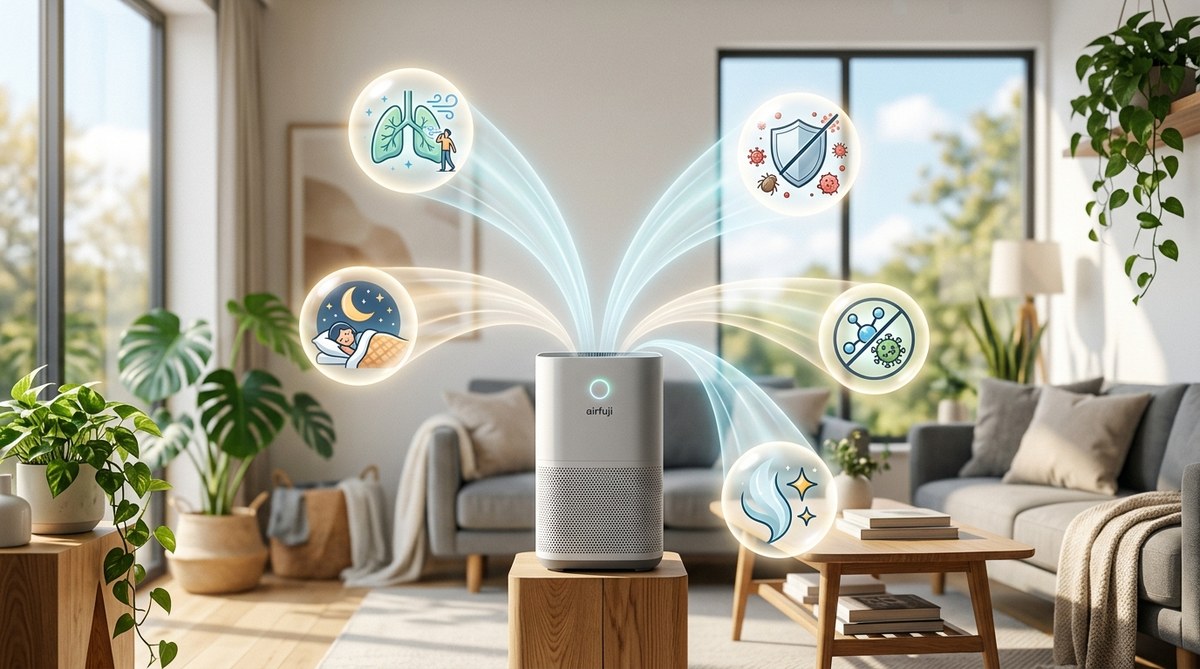
You know that feeling when you walk into a room and the air just feels… heavy? Stale, dusty, a little bit like something is sitting on your chest. Most people assume that indoor air is safer than outdoor air. The data says otherwise. The EPA has found that indoor air can be two to five times more polluted than the air outside your front door. And those pollutants don’t take a lunch break. They don’t disappear when you go to sleep. They hang around all day, all night, every single minute. That is exactly why the question of whether to run your purifier continuously matters more than most homeowners realize.
Running an air purifier 24/7 keeps indoor pollutants at consistently low levels because air quality degrades rapidly once the unit stops. Continuous operation means fewer allergy triggers, better sleep, lower energy costs than expected, and a longer filter lifespan when using auto mode. The science supports leaving it on. It is safe, efficient, and the best way to protect your home’s air around the clock.
Why Indoor Air Quality Falls Apart When the Purifier Shuts Off
Think about what happens inside your home on a normal day. Cooking breakfast sends fine particles into the kitchen. Your dog shakes off dander in the living room. The HVAC system kicks on and stirs up dust that has settled behind the furniture. Offgassing from furniture, carpets, and cleaning products adds volatile organic compounds to the mix.
Your air purifier does not fix all of that in one pass. It cycles the air through its filters multiple times per hour. Most manufacturers recommend a unit that can handle four to six air changes per hour for the room size. That means every ten to fifteen minutes, the entire volume of air in that room gets pulled through the filter.
The moment you turn the unit off, the cycle stops. Pollutants start accumulating again immediately. Within a few hours, particle levels can climb back to where they were before you turned the machine on. That is the core reason why intermittent use is less effective than continuous operation.
How Many Hours of Operation Actually Move the Needle?
There is no magic number of hours that works for everyone. But the research points to one clear pattern: longer run times equal lower average particle concentration. Here is a practical breakdown of what different run times look like in a typical bedroom.
| Run Time Per Day | Average Particle Reduction | Typical User Experience |
|---|---|---|
| 4 hours (while awake) | 20 to 30 percent | Noticeable during use, but air feels stale by morning |
| 8 hours (while sleeping) | 40 to 50 percent | Good sleep quality, but daytime allergens still spike |
| 12 hours (daytime only) | 50 to 60 percent | Comfortable during the day, less restful sleep at night |
| 24 hours (continuous) | 80 to 90 percent | Consistent air quality around the clock, fewer symptoms |
The difference between 12 hours and 24 hours is not just about doubling the runtime. It is about preventing the rebound effect. When your purifier runs all day and all night, particle levels never get a chance to climb back up. Your lungs get a real break.
Five Unbelievable Benefits of Running an Air Purifier 24/7
1. Your Allergy Symptoms Drop Faster Than You Expect
If you suffer from seasonal allergies or year-round dust sensitivity, you know the drill. You wake up stuffy. Your eyes itch. You reach for the tissues before your morning coffee. Running your purifier only when you are home might help a little, but it does not stop the overnight accumulation of allergens.
Continuous operation changes that. Pollen, dust mites, pet dander, and mold spores get captured throughout the night while you sleep. When you wake up, the air in your bedroom is cleaner than it was when you went to bed. For many allergy sufferers, this is the single biggest quality of life improvement they can make without medication.
“I tell my patients that an air purifier running 24/7 is like giving your immune system a night off. If you stop removing the triggers, your body keeps reacting. Consistency is everything.” — Dr. Patricia Lin, allergist and immunologist
2. Sleep Quality Improves Because Your Airways Stay Clear
Nasal congestion is a major sleep disruptor. Even mild congestion can reduce deep sleep stages and leave you feeling groggy in the morning. When your air purifier runs all night, it continuously removes the fine particles that irritate your nasal passages and throat.
You breathe easier. Your sinuses stay clearer. Your body spends less energy fighting irritants and more energy on restoration. People who switch to continuous operation often report falling asleep faster and waking up feeling more refreshed within the first week.
3. Energy Costs Are Lower Than You Think
This is the concern we hear most often. “Won’t my electric bill go through the roof if I run it all the time?” The short answer is no. Most modern air purifiers with Energy Star certification use between 30 and 80 watts on the standard fan speed. That is comparable to a ceiling fan or a small lamp.
Let us do the math. A unit that draws 50 watts running 24 hours a day uses 1.2 kilowatt-hours per day. At the average US electricity rate of about 16 cents per kWh, that comes to roughly 19 cents per day. That is less than six dollars a month. For most households, that is a small price to pay for consistently cleaner air.
If you use the auto mode with a particle sensor, the unit runs on low most of the time and only ramps up when it detects a spike. That lowers the average power draw even further.
4. Your Filters Actually Last Longer Overall
This sounds backwards at first. Running the machine more means changing filters more often, right? Not necessarily. Here is why.
When you run the purifier intermittently, it has to work harder each time it turns on. The fan speeds up to high to catch up on the accumulated particles. That sudden burst of high speed pulls more debris into the filter at once, clogging the media faster in the short term.
With continuous operation on a low or auto setting, the filter captures particles at a steady, moderate rate. The fan does not have to surge. The airflow stays consistent. Many users find that running the purifier 24/7 on auto mode extends their filter replacement interval compared to running it on high for only a few hours a day.
5. You Get Protection During Sudden Pollutant Spikes
Some events are unpredictable. A neighbor starts a bonfire. Someone sprays pesticides on the lawn next door. You burn toast in the kitchen. A wildfire hundreds of miles away sends a haze of smoke into your region.
If your purifier is already running, it responds immediately. The sensor detects the spike, the fan speeds up, and the filtration kicks into high gear within seconds. If the unit is off, you have to notice the problem, walk over to the machine, and turn it on. By then, you have already inhaled a lungful of whatever just entered your home.
Continuous operation means you are always ahead of the pollution curve. This is especially valuable during wildfire season when air quality can change from safe to hazardous in a matter of minutes.
Common Misconceptions About Running an Air Purifier All Day
Let us clear up a few misunderstandings that keep people from leaving their purifier on.
Myth: Running it 24/7 will burn out the motor.
Modern brushless DC motors found in most mid-range and premium purifiers are designed for continuous operation. They have no brushes to wear out and generate very little heat. These motors are rated for tens of thousands of hours of use. Running them nonstop for years is well within their design specifications.
Myth: It will make the room too dry or too cold.
Air purifiers do not change the temperature or humidity of a room. They only filter particles. If your room feels drafty, check the placement. Keep the unit away from direct seating areas, and consider a model with a low noise rating if the airflow bothers you.
Myth: You only need it during allergy season.
Indoor pollutants are present year round. Dust, dander, mold spores, and VOCs do not take a winter vacation. Running the purifier continuously ensures consistent air quality no matter what the calendar says.
The Best Way to Set Up Continuous Operation
Getting the most out of your purifier does not require complicated scheduling. Follow these steps to optimize your setup.
-
Choose the right size unit for the room. A unit that is too small will struggle to keep up even with continuous operation. Check the CADR rating and match it to your room’s square footage. If you need help, read our guide on how to calculate the right air purifier size for every room in your home.
-
Place it in the right spot. Keep the purifier at least 12 inches away from walls and furniture. Do not tuck it behind a curtain or under a desk. Air needs to flow freely into the intake and out of the vents.
-
Use auto mode if available. Auto mode lets the purifier adjust its fan speed based on real time air quality readings. This keeps energy use low during clean periods and ramps up filtration when needed.
-
Check the filter monthly. Even with continuous operation, you should inspect the pre-filter and main filter every 30 days. A quick vacuum of the pre-filter can extend its life significantly. Learn more about why your air purifier isn’t working as well as it should.
-
Keep doors and windows closed during high pollution events. Your purifier works best when it is filtering the air in a closed space. Opening windows during wildfire season or high pollen days undermines the whole effort.
When 24/7 Operation Matters Most
Some situations make continuous operation not just beneficial but almost necessary.
-
Households with asthma sufferers. Asthma triggers are airborne. Keeping particle levels low around the clock reduces the chance of attacks. Check our recommendations for how to choose an air purifier for asthma and allergy relief.
-
Homes with indoor pets. Dogs and cats shed dander and fur continuously. Even hypoallergenic breeds produce dander. A purifier running 24/7 captures these particles before they settle into carpets and upholstery.
-
Bedrooms used for sleep. You spend a third of your life breathing the air in your bedroom. That room deserves the highest air quality you can provide. A quiet air purifier for your bedroom running all night is a game changer for sleep quality.
-
Open floor plans with connected kitchens. Cooking generates fine particles and odors that spread throughout the main living area. Continuous filtration keeps those particles from settling on surfaces and lingering in the air.
Understanding the Numbers: CADR, ACH, and What They Mean
Two terms show up on every purifier spec sheet, and they matter for continuous operation.
CADR stands for Clean Air Delivery Rate. It tells you how many cubic feet of air the unit can clean per minute for pollen, dust, and smoke. Higher numbers mean faster cleaning. For continuous operation, you want a CADR that is at least two thirds of your room’s square footage.
ACH stands for Air Changes per Hour. This is the number of times the purifier cycles the entire volume of air in the room through the filter in one hour. For continuous operation, aim for four ACH or higher. That means the air in your room gets fully filtered every 15 minutes.
If you are shopping for a new unit, our guide to 7 key features to look for in an air purifier in 2026 breaks down exactly what to check before you buy.
Making the Switch to Continuous Operation
If you have been running your purifier on a timer or turning it off when you leave the house, try a different approach for one week. Set it to auto mode or low speed and leave it on. Pay attention to how you feel.
- Check your allergy symptoms in the morning.
- Notice whether your sinuses feel clearer.
- Look at the filter after seven days to see what it caught.
Most people who try this switch never go back. The air stays fresher. The dust on surfaces builds up slower. And the peace of mind that comes from knowing your indoor air is being cleaned every minute of every day is hard to overstate.
If you want to choose the best air purifier for your home and set it up for round the clock performance, we have resources to help you make the right call.
Your Lungs Deserve Consistent Protection
Pollution does not clock out at five o’clock. Your home’s air quality does not reset overnight. The only way to stay ahead of the particles, allergens, and VOCs that float through your living space is to filter them continuously. Running your air purifier 24/7 is not overkill. It is the most effective, most efficient way to protect your indoor environment.
Whether you are managing asthma, fighting seasonal allergies, or just trying to breathe easier in your own home, leaving that purifier on is one of the simplest changes you can make. It costs less than a cup of coffee per month. It requires no extra effort. And it gives your body a constant supply of cleaner air, day and night. That is a benefit worth keeping on your schedule every single hour.