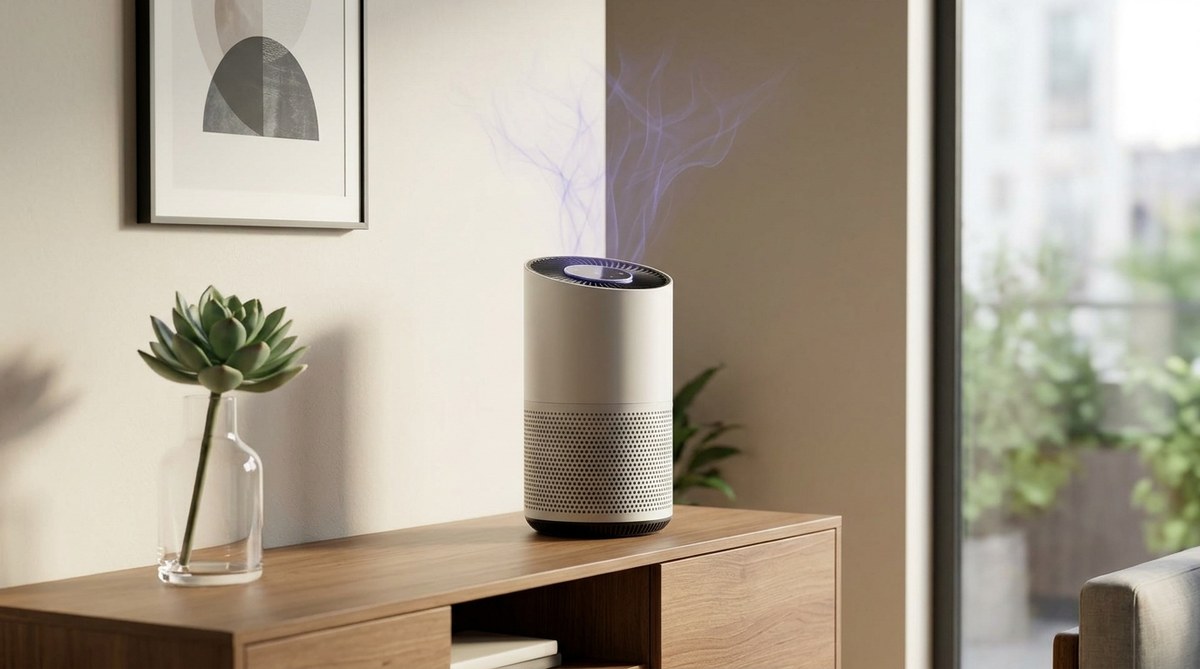
You bought an air purifier to protect your lungs. You wanted cleaner air, fewer allergens, and peace of mind. But what if the very device you trusted was quietly making things worse? That is the reality for thousands of households that unknowingly use ozone-generating air purifiers. The hidden danger of ozone is real, and it can damage your respiratory system over time. Let’s break down why some air purifiers are worse for your lungs and how you can avoid them.
Ozone air purifiers are not safe for daily use. They produce ozone gas that can inflame lung tissue, trigger asthma attacks, and reduce your body’s ability to fight respiratory infections. The best way to protect your lungs is to choose a purifier that uses true HEPA filtration and activated carbon, with zero ozone output. Always check the fine print before buying.
Why ozone is a problem for your lungs
Ozone is a gas made of three oxygen atoms. In the upper atmosphere, it protects us from UV rays. But at ground level, it is a pollutant. The Environmental Protection Agency (EPA) warns that ozone can cause chest pain, coughing, throat irritation, and congestion. It can also worsen bronchitis, emphysema, and asthma. For someone with allergies or asthma, breathing ozone is like inviting an irritant into your lungs every day.
Some air purifiers deliberately create ozone. They are often labeled as “ionizers,” “electrostatic precipitators,” or “ozone generators.” These devices use high voltage to charge particles, which then stick to surfaces. But that process also produces ozone as a byproduct. The California Air Resources Board has banned some of these devices because they emit ozone above safe limits. Yet many are still sold online and in stores across the United States.
How to tell if your air purifier produces ozone
You cannot see ozone. You might smell it, though. Ozone has a sharp, bleach-like odor. If your air purifier gives off that smell, it is likely producing ozone. But not all ozone is detectable by smell. The only way to be sure is to check the product specifications.
Here is what to look for:
- Ozone output rating: Any reputable manufacturer will list the ozone output in parts per million (ppm) or milligrams per hour (mg/h). If they do not list it, that is a red flag.
- Certification: Look for CARB certification (California Air Resources Board). Devices sold in California must meet strict ozone limits. If a unit is CARB certified, it is safe.
- Technology type: Avoid devices that advertise “ionization,” “corona discharge,” or “ozone generation” as a feature. These are red flags.
- HEPA only: True HEPA purifiers use a fan and a filter. They do not create ozone. If a purifier says “HEPA-type” or “HEPA-like,” it is not the real deal.
Common types of ozone-producing air purifiers
Not all air purifiers are created equal. Some technologies are riskier than others. Here is a breakdown:
| Technology | How it works | Ozone risk | Best for |
|---|---|---|---|
| True HEPA filter | Traps particles in a dense fiber mat | None | Allergies, asthma, general use |
| Activated carbon filter | Absorbs gases and odors | None | VOCs, smoke, cooking smells |
| Ionizer (ionic) | Charges particles so they stick to surfaces | High | Not recommended for lungs |
| Electrostatic precipitator | Charges particles and collects them on plates | Moderate to high | Only if CARB certified |
| Ozone generator | Produces ozone to kill mold and bacteria | Very high | Only for unoccupied spaces |
| UV-C light | Uses ultraviolet light to kill germs | Low (if enclosed) | Germicidal use, with caution |
Ionizers and ozone generators are the biggest offenders. They are often marketed as “chemical-free” or “filterless.” That sounds great, but the trade-off is your lung health. A filterless purifier is not a benefit if it releases ozone into your living room.
The science behind ozone and lung damage
Studies from the American Lung Association show that ozone can cause inflammation in the lungs. It acts like a sunburn on your respiratory tissue. Over time, repeated exposure can lead to scar tissue and reduced lung function. For children, the elderly, and people with asthma, the effects are even more severe.
A 2020 study from Harvard University found that long-term exposure to ground-level ozone was linked to higher rates of respiratory illness. The researchers noted that indoor ozone levels from air purifiers can sometimes exceed outdoor smog levels. That is a scary thought. You buy an air purifier to escape pollution, but you end up creating your own indoor smog.
How to choose a safe air purifier for your lungs
You deserve clean air without hidden risks. Here is a simple process to pick a safe machine:
- Check the label for ozone claims. If the box says “ozone free” or “zero ozone,” that is a good sign. If it says “ionizer” or “ozone generator,” put it back.
- Look for CARB certification. This is the gold standard for safety in the United States. Any purifier sold in California must meet this standard. If a company sells nationwide, they usually get CARB certified anyway.
- Choose true HEPA. A mechanical HEPA filter traps 99.97% of particles down to 0.3 microns. It does not create ozone. This is the safest choice for asthma and allergy relief.
- Read independent reviews. Do not trust the product page alone. Look for third-party tests that measure ozone output. Sites like the EPA and AHAM (Association of Home Appliance Manufacturers) have resources.
- Avoid combination units that include ionizers. Some purifiers advertise “HEPA + ionizer” as a bonus feature. Skip those. The ionizer adds nothing but risk.
What to do if you already own an ozone purifier
If you suspect your current air purifier produces ozone, do not panic. Here is a plan:
- Stop using it in occupied rooms. Move it to a garage or storage space.
- Replace it with a true HEPA purifier. The investment is worth your health.
- If you cannot replace it right away, run it only when the room is empty, and ventilate well afterward.
- Check the guide to avoiding harmful ozone emissions for more detailed steps.
“Ozone is a powerful lung irritant. Even at low levels, it can cause breathing problems. If you have asthma, you should avoid any device that produces ozone.” — Dr. Lisa Patel, pulmonologist and asthma specialist
The hidden marketing tricks to watch for
Companies know that ozone sounds scary. So they use clever language to hide it. Here are phrases that should make you skeptical:
- “Fresh air technology” — often a code word for ozone.
- “Natural purification” — ozone occurs naturally, but that does not make it safe indoors.
- “Filterless” — sounds convenient, but it usually means ionization.
- “Bipolar ionization” — a newer term for an old technology that can produce ozone.
- “Energized oxygen” — this is just ozone by another name.
If the marketing feels vague, that is intentional. A safe purifier will proudly state “HEPA filter” and “zero ozone.” If the manufacturer is hiding the technology, there is probably a reason.
How to test your air for ozone at home
You can buy an ozone test kit online for around $20 to $30. These kits use a chemical reaction to detect ozone in the air. Follow these steps:
- Turn off all ventilation and close the room.
- Run the air purifier on high for one hour.
- Use the test kit according to the instructions.
- Compare the result to the color chart.
If the test shows any ozone, stop using the purifier in occupied spaces. This is especially important for bedrooms and nurseries.
Why this matters more in 2026
Indoor air quality has become a major focus for American families. Wildfire seasons are getting longer. Pollen counts are rising. More people work from home. We are spending more time indoors than ever. That means the air purifier market is booming. And with that boom comes more devices that cut corners.
In 2026, many budget-friendly purifiers still rely on ionizers to reduce costs. They skip the HEPA filter and use a metal plate instead. That saves money on replacement filters, but it exposes you to ozone. Do not fall for the lower price tag. Your lungs are worth more than the savings on filter replacements.
A better approach to cleaner air
You do not need ozone to clean your air. A well-designed HEPA purifier combined with activated carbon can handle dust, pollen, pet dander, smoke, and volatile organic compounds (VOCs). It does all of this without producing any harmful byproducts.
For even better results, pair your purifier with a few simple habits:
- Vacuum with a HEPA filter vacuum.
- Keep windows open when outdoor air quality is good.
- Use exhaust fans in the kitchen and bathroom.
- Maintain healthy humidity levels with a dehumidifier if needed. Check out tips for choosing the best dehumidifier for guidance.
Your next steps for lung-safe air
You do not need to be a scientist to protect your lungs. You just need to know what to look for. Here is a summary of safe and unsafe features:
- Safe: True HEPA filter, activated carbon, CARB certified, zero ozone output
- Unsafe: Ionizer, electrostatic precipitator, ozone generator, no CARB certification
- Gray area: UV-C light (safe if enclosed), washable pre-filters (safe but not for ozone)
If you want a deeper look at the best models for respiratory health, read our guide to top air purifiers for allergies and asthma relief in 2026. That article breaks down specific brands and models that are safe for your lungs.
Protecting your family starts with the right choice
You took the first step by reading this article. That means you care about your health and the air your family breathes. That is a big deal. The market is full of confusing claims, but now you know the truth. Ozone air purifiers are not a hidden gem. They are a hidden danger. Stick with HEPA, check for CARB certification, and never trust vague marketing language.
Your lungs will thank you. Your asthma will improve. Your allergies will feel more manageable. And you will sleep better knowing the air in your home is truly clean, not chemically altered. Make the switch today. Your future self will breathe easier.