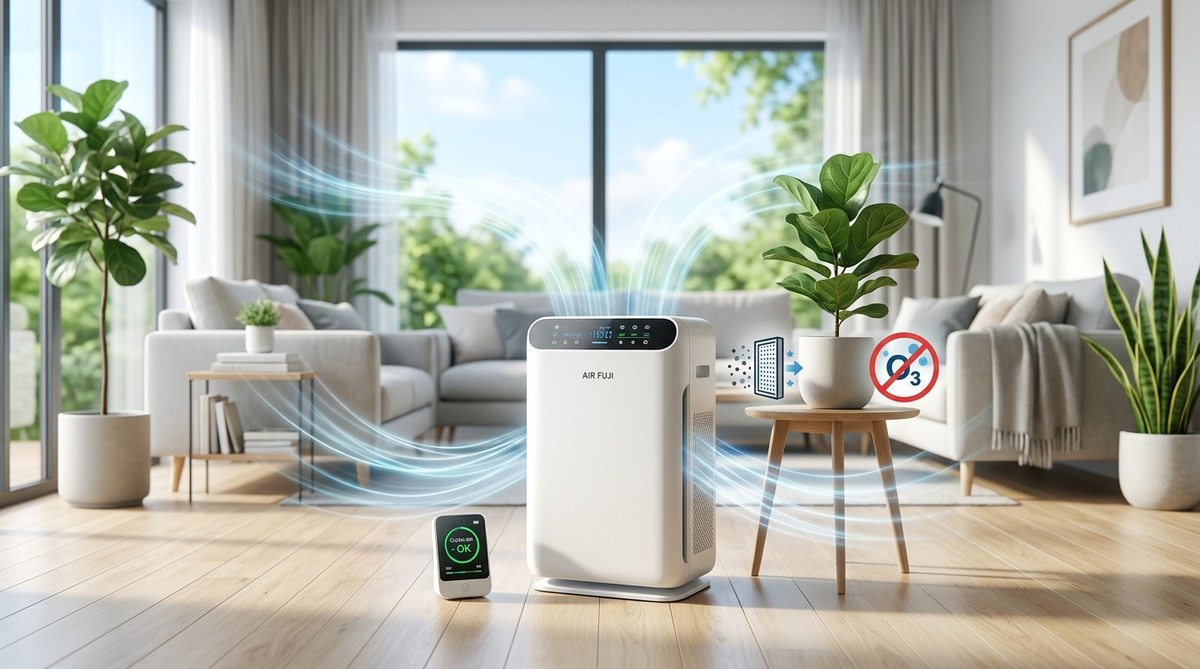
The air purifier sitting in your living room might be sending something invisible into your lungs. And it is not the clean air you paid for. Many popular air purifiers, especially older models or those using certain technologies, release ozone as a byproduct. For someone with asthma, allergies, or even just a sensitive respiratory system, that extra ozone can trigger coughing, chest tightness, and long term irritation.
The good news? You do not have to give up on cleaner air to avoid this problem. With a few smart choices and some basic knowledge, you can breathe easier without worrying about what your purifier is adding to the room.
Ozone from air purifiers is a real concern, especially for people with asthma or respiratory sensitivities. Not all purifiers emit ozone. The safest choices are true HEPA filters and activated carbon models. Avoid ionizers, electrostatic precipitators, and UV-C units that lack ozone safeguards. Look for CARB certification and check the fine print. A little upfront research keeps your indoor air truly clean.
What Makes Ozone Harmful in Your Home
Ozone is a gas made of three oxygen atoms. High up in the atmosphere, it protects us from UV rays. But at ground level, it is a different story. Ground level ozone is a powerful respiratory irritant. It inflames the lining of your lungs, reduces lung function, and can trigger asthma attacks. The EPA has linked long term ozone exposure to permanent lung damage.
When your air purifier emits ozone, it adds this irritant directly into the space where you sleep, work, and relax. That defeats the whole purpose of owning a purifier.
The California Air Resources Board (CARB) warns that ozone generators, even those sold as air cleaners, can produce indoor ozone concentrations that exceed health standards. If you have asthma, COPD, or children in the home, this is especially risky.
Why Some Air Purifiers Produce Ozone
Not all purifiers are created equal. Some technologies naturally create ozone as a side effect. Others are designed to release ozone on purpose, claiming it “sanitizes” the air. Those claims are misleading and, in many cases, dangerous.
Here are the common culprits:
- Ionizers and electrostatic precipitators: These use an electrical charge to grab particles. That charge can split oxygen molecules, creating ozone.
- UV-C light purifiers: Ultraviolet light can produce ozone, especially at certain wavelengths. Not all UV purifiers do this, but many do.
- Ozone generators: These devices intentionally release ozone. They are often marketed as “air purifiers” but should be avoided entirely.
- Plasma or cold plasma units: These create charged particles that can generate ozone as a byproduct.
The safest technology for avoiding ozone is a true HEPA filter with activated carbon. No electrical charge, no UV light, no ozone.
How to Avoid Ozone Emissions from Air Purifiers: 5 Practical Steps
Follow this numbered list to protect your indoor air. Each step helps you avoid ozone emissions from air purifiers and choose a unit that actually cleans without adding pollution.
-
Check for CARB certification. Any air purifier sold in California must meet strict ozone limits. Look for a CARB certificate number on the box or product page. This is the single best indicator that a unit is safe.
-
Read the fine print on the spec sheet. Many brands hide ozone information in the manual or a PDF. Search for “ozone” in the product documentation. If you cannot find any mention, that is a red flag, not a green one.
-
Avoid any unit labeled “ionizer,” “electrostatic,” or “ozone generator.” These words are warnings. Even if the marketing says “low ozone,” skip it. There is no reason to accept any amount when HEPA alternatives exist.
-
Look for true HEPA with activated carbon. A mechanical HEPA filter traps particles without electricity. Activated carbon removes gases and odors. Together, they give you clean air with zero ozone risk. For guidance, check out our guide on choosing the best air purifier for your home.
-
Test your air after setup. Use a handheld ozone meter to measure levels in the room before and after running the purifier. If you see any increase, return the unit immediately. This is especially important if you have asthma or allergies.
Technologies vs. Ozone Risk: A Clear Comparison
The table below breaks down common air purifier technologies and their ozone risk. Use it as a cheat sheet when shopping.
| Technology | Ozone Risk Level | Best For | Notes |
|---|---|---|---|
| True HEPA filter | None | Allergies, asthma, general dust | Safest option. No electricity needed for filtration. |
| Activated carbon | None | Odors, VOCs, chemical gases | Often paired with HEPA. Completely safe. |
| Ionizer / Electrostatic | Moderate to high | Particle removal (but at a cost) | Produces ozone as a byproduct. Not recommended. |
| UV-C light | Low to moderate | Bacteria and virus control | Some units are safe if shielded. Check CARB cert. |
| Ozone generator | Very high | “Sanitizing” (marketing claim) | Avoid completely. These are not true air purifiers. |
| Plasma / Cold plasma | Moderate to high | Particle and microbial control | Ozone production varies. Hard to verify safety. |
If you want to see how these technologies compare in real world use, read our breakdown of HEPA vs. UV-C air purifiers.
Common Mistakes That Let Ozone Into Your Home
Even careful shoppers can slip up. Here are the most frequent mistakes people make when trying to avoid ozone emissions from air purifiers.
- Trusting “ozone free” labels without verification. Some brands print “ozone free” on the box even when the unit uses ionizer technology. Always check the certification, not the marketing.
- Buying a used or vintage purifier. Older units, especially those from the 1990s and early 2000s, often used ionizers. They may not meet modern safety standards. If you buy secondhand, check the model number against CARB’s database.
- Using a UV-C purifier in a small room. Even low ozone units can concentrate ozone in a tight space like a bedroom or home office. If you must use UV, keep it in a large, well ventilated area.
- Ignoring the manual’s warnings. Some manuals say “use only in unoccupied spaces” or “ventilate during use.” That is a sign the unit produces ozone. A safe purifier should be fine to run while you are in the room.
For more on avoiding these pitfalls, see our list of common air purifier mistakes.
What to Look for When Shopping in 2026
The market has improved. In 2026, many major brands have moved away from ozone producing technologies. But some still sell ionizer models, especially at lower price points. Here is what to look for.
- CADR rating with HEPA only: The Clean Air Delivery Rate should be based on mechanical filtration, not ionization. If the CADR test used the ionizer mode, the number may be inflated.
- No “ion” button: Some purifiers let you turn the ionizer on or off. That is better than having it always on, but why risk it? Buy a unit without an ionizer at all.
- Activated carbon weight: For odor and VOC removal, look at how much carbon is inside. More carbon means better gas absorption and less reliance on other technologies.
- Energy Star certification: This is not directly about ozone, but Energy Star units tend to be newer and better designed. They are less likely to use outdated ozone technologies.
If you are starting from scratch, our guide on 7 key features to look for in an air purifier in 2026 will walk you through every detail.
How to Test Your Current Air Purifier for Ozone
Not sure if your existing unit is safe? Here is a simple process.
- Turn off the purifier and open a window for 30 minutes to let the room air out.
- Close the room and let it settle for 10 minutes. Measure the ozone level with a handheld meter. Write down the baseline.
- Turn on the purifier at the highest setting. Close the door. Wait one hour.
- Measure the ozone level again. If it has risen by more than 5 parts per billion (ppb), your purifier is likely producing ozone.
- Repeat the test in a different season or humidity level. Ozone production can vary with temperature and humidity.
If your purifier fails this test, consider replacing it. For help finding a safe replacement, read our recommendations for top air purifiers for allergies and asthma relief in 2026.
The Role of Ventilation and Humidity
Even with a safe purifier, your indoor ozone levels depend on more than just the machine. Outdoor ozone can seep in through open windows and cracks. High humidity can increase ozone production in some ionizing units.
To keep your indoor air healthy:
- Use an exhaust fan in the kitchen and bathroom to remove indoor pollutants.
- Keep humidity between 30% and 50% using a dehumidifier if needed. See our tips on understanding dehumidifier settings for more.
- Change your HVAC filter regularly. A good MERV 13 filter in your central system can capture particles and reduce the load on your room purifier.
A whole home approach is always better than relying on a single machine. For broader strategies, check out our top strategies to improve indoor air quality.
Why Ozone Generators Are Still on Shelves
It is fair to ask: if ozone is so bad, why are ozone generators still sold? The answer is complicated. The EPA and CARB have strict rules, but enforcement can be slow. Some manufacturers market ozone generators as “air sanitizers” to get around labeling laws. Others claim their units produce “safe levels” of ozone, even though any added ozone is unnecessary.
Some consumers are drawn to the idea of a machine that kills bacteria and viruses with ozone. But the science is clear: the amount of ozone needed to sanitize the air is far above safe breathing levels. You can get the same germ killing benefits from a HEPA filter and UV light combination without the ozone risk.
If you want to understand more about how these technologies compare, read our article on enhancing your home environment with advanced air purifier technologies.
Protecting Sensitive Lungs: Extra Tips for Families
If you or a family member has asthma, COPD, or another respiratory condition, you need to be extra careful. Even small amounts of ozone can trigger symptoms.
- Place the purifier in the room where you spend the most time, usually the bedroom.
- Run the purifier on a low, quiet setting overnight. HEPA purifiers are safe to run 24/7.
- Avoid any product that says “ionizing” or “plasma” on the box, even if it also has a HEPA filter.
- Talk to your allergist or pulmonologist. Many doctors now recommend specific HEPA only models to their patients.
- Monitor your symptoms. If you notice more coughing or wheezing after using a new purifier, turn it off and test for ozone.
For a detailed look at choosing the right unit, see our guide on selecting the perfect air purifier for your family’s health and safety.
A Simple Way to Remember What Is Safe
When you are shopping online or in a store, keep this one rule in mind: if it plugs in and uses electricity to clean air, ask how it cleans. Mechanical filtration (a fan pushing air through a filter) is safe. Electrical methods (ionizers, electrostatic, plasma, UV) can produce ozone.
Stick with the mechanical approach and you will rarely go wrong.
Your Next Steps for Truly Clean Indoor Air
The air inside your home should be a refuge, not a source of hidden irritants. By learning how to avoid ozone emissions from air purifiers, you take control of your indoor environment in a meaningful way.
Start by checking your current purifier. If it is safe, great. If not, replace it with a CARB certified HEPA model. Then test the air to confirm. These few steps can make a real difference for your lungs and your family’s health.
For more help on this journey, browse our full collection of air purifier guides and product recommendations. Your home deserves air that is clean in every sense of the word.