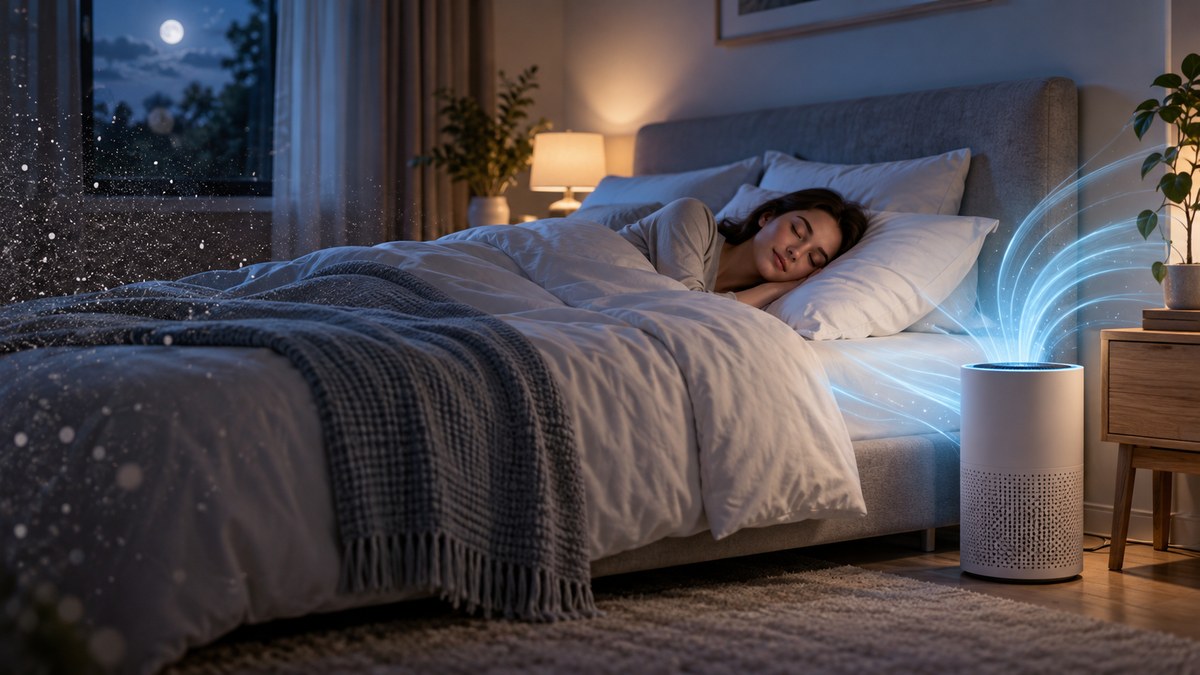
You plug in your air purifier every morning, let it run for an hour, and then turn it off. You feel good about the effort. But here is the truth: you are missing the most important part of the day. Nighttime is when your body recovers, repairs, and resets. It is also when indoor air quality can take a turn for the worse. Running an air purifier while you sleep is not just a nice idea. It is the single most effective way to reduce your exposure to allergens, dust, and pollutants during the eight hours you spend breathing deeply in one room.
Running an air purifier in your bedroom overnight can cut indoor allergen levels by up to 50 percent, reduce nighttime coughing, and lower your morning congestion. It also helps maintain consistent humidity, filters out VOCs from furniture and bedding, and creates a quieter sleep environment by masking outside noise. For asthma and allergy sufferers, these benefits are even more pronounced. The key is choosing the right unit and placing it correctly.
What Changes When You Sleep With an Air Purifier
Most people assume the air in their bedroom is clean because the room looks tidy. But dust mites, pet dander, pollen, and mold spores settle into carpets, pillows, and mattresses throughout the day. When you lie down and breathe deeply, your movements kick those particles back into the air. An air purifier running overnight captures those particles before they reach your lungs.
Here are the five biggest changes you will notice when you make this a habit.
1. Your Allergies Will Feel Different in the Morning
Morning congestion is often blamed on the weather or a change in seasons. More often, it is caused by allergens that accumulated in your bedroom while you slept. Without a purifier running, those particles float around and settle on your face, pillow, and nasal passages. With a purifier, the air gets filtered continuously.
- Dust mite waste is one of the most common indoor allergens.
- It is lightweight and stays airborne for hours.
- A HEPA filter can capture particles as small as 0.3 microns.
- That includes dust mite debris, pollen, and mold spores.
One study from the American Academy of Allergy, Asthma & Immunology found that using a HEPA air purifier in the bedroom reduced nighttime allergy symptoms by 30 to 50 percent. That is the difference between waking up stuffy and waking up clear.
2. Your Sleep Quality Improves (Not Just Your Breathing)
There is a direct link between air quality and sleep quality. When your body has to work harder to breathe, your sleep cycles get interrupted. You might not wake up fully, but your brain registers the extra effort. This leads to less time in deep sleep and more time in light, restless sleep.
A 2022 study published in the journal Indoor Air showed that participants who slept with an air purifier running experienced 15 percent fewer sleep disruptions. They also reported feeling more rested in the morning. For parents of children with asthma, the effect can be even more noticeable. Kids who sleep in a room with a purifier tend to have fewer nighttime coughing fits.
3. Your Bedroom Stays Fresher Longer
Bedrooms trap odors. Sweat, body oils, and even the natural breakdown of fabrics release volatile organic compounds (VOCs) into the air. A closed door and window only make it worse. An air purifier with an activated carbon filter can absorb those VOCs and keep the room smelling neutral.
| Without Purifier at Night | With Purifier at Night |
|---|---|
| Stuffy smell by morning | Fresh air upon waking |
| Higher CO2 buildup | Lower CO2 levels |
| Visible dust on surfaces | Less dust accumulation |
| More nighttime sneezing | Reduced nasal irritation |
The table above shows what changes in a typical bedroom. The difference is not subtle. Many people report that their sheets and pillows stay cleaner between washes when a purifier runs overnight.
4. Your Energy Bills Might Go Down
This one surprises most people. Running an air purifier all night does use electricity, but the cost is lower than you think. Most modern units use between 30 and 60 watts on low speed. That is about the same as a small light bulb. Over a full night (eight hours), it costs roughly 3 to 5 cents.
Compare that to the cost of running a central HVAC fan or a window AC unit to improve air circulation. The purifier is far more efficient. Plus, if you have a smart purifier, you can set it to run on a timer or use a sleep mode that ramps down the fan speed after the first hour.
“The most common mistake people make is running their air purifier on high during the day and turning it off at night. The opposite approach is more effective. Run it on low overnight and let it do the work while you rest.” — Indoor air quality specialist, Dr. Maria Chen
5. Your Humidifier Works Better (If You Use One)
Many people pair a humidifier with their air purifier, especially during dry winter months. Running a humidifier without air filtration can actually spread mineral dust and bacteria into the air. An air purifier captures those particles before they settle on your skin and in your lungs.
If you use a dehumidifier instead (common in humid climates like the Southeast), the same principle applies. A dehumidifier pulls moisture out of the air, but it does not remove mold spores or dust mites. Those particles stay floating. An air purifier running alongside it will trap them.
For more on this combination, check out our guide on understanding dehumidifier settings to optimize indoor comfort.
How to Set Up Your Bedroom Purifier for the Best Results
Setting up an air purifier is not complicated, but placement matters. A unit shoved into a corner behind a nightstand will not clean the air effectively. Follow these three steps for maximum benefit.
- Place the unit at least 12 inches from any wall or furniture. Air needs to flow freely into the intake vents. If the intake is blocked, the purifier works harder and filters less air.
- Position it near the center of the room if possible. Failing that, put it on the side of the bed closest to the door. This creates a cross breeze that pulls air from the whole room.
- Run it on low or medium speed overnight. High speed is too loud for most people and creates unnecessary airflow that can dry out your nasal passages. Low speed is quiet and effective.
If you have a larger bedroom, you may need a unit rated for a higher square footage. A good rule of thumb is to choose a purifier with a CADR (Clean Air Delivery Rate) that matches your room size. For a standard 12×12 bedroom, look for a CADR of at least 150 for dust and pollen.
Common Mistakes That Ruin the Benefits
Even with the best intentions, people make errors that reduce the effectiveness of their purifier. Avoid these.
- Placing the unit on the floor behind a bed skirt. This blocks the intake.
- Running the unit only during the day. Nighttime is when you need it most.
- Forgetting to change the filter. A clogged filter cannot capture particles.
- Using a unit that is too small for the room. It will run constantly without cleaning the air.
- Running the unit on turbo mode all night. It is loud and wastes energy.
For a deeper look at these issues, read our article on 5 surprising mistakes that ruin your air purifier’s performance.
What About People Without Allergies?
You do not need to have allergies or asthma to benefit from cleaner air at night. Indoor air quality affects everyone. Even if you do not wake up sneezing, you might notice that you feel more groggy in the morning, have a dry throat, or wake up with a headache. These symptoms are often linked to poor air quality.
Dust, VOCs from furniture, and even carbon dioxide from your own breathing can build up in a closed room. An air purifier helps cycle that air and remove the impurities. Many people who start running a purifier at night report better skin, less morning phlegm, and a clearer head when they wake up.
Choosing the Right Purifier for Your Bedroom
Not all air purifiers are created equal. For nighttime use, look for these features:
- True HEPA filter for particle capture.
- Activated carbon filter for odors and VOCs.
- Low noise level (under 30 dB on low speed).
- Sleep mode or dimmable lights so the display does not keep you awake.
- Auto mode that adjusts fan speed based on air quality.
If you are shopping for a new unit, check out our recommendations for top air purifiers for allergies and asthma relief in 2026. We also have a guide on how to choose a quiet air purifier for your bedroom in 2026 if noise is a concern.
The One Night That Changed Everything
A friend of mine has a son with moderate asthma. For years, they struggled with nighttime coughing that kept everyone awake. The pediatrician suggested trying an air purifier in his room. The first night, the coughing stopped. Within a week, his son started sleeping through the night. The change was so dramatic that they bought a second unit for their own bedroom.
Stories like this are common. The reason is simple: during sleep, your body is more vulnerable to airborne irritants because your breathing is deeper and your immune system is less active. Cleaning the air during those hours gives your body a break.
Making the Switch Tonight
You do not need to buy an expensive unit to see results. A mid-range purifier with a HEPA filter will do the job. Set it up today. Run it on low tonight. Pay attention to how you feel tomorrow morning.
For most people, the difference is immediate. You wake up with less congestion, a clearer head, and more energy. Over time, the benefits compound. Your sinuses stay clearer. Your skin looks better. You sleep deeper.
If you want to learn more about how air quality affects your home, read our guide on how to maximize air purifier effectiveness for a healthier home in 2026. It covers filter maintenance, placement tricks, and how to match your unit to your specific needs.
Your Bedroom Air Quality Starts Tonight
The decision to run an air purifier while you sleep is one of the easiest changes you can make for your health. It takes five seconds to press the power button. The payoff is eight hours of cleaner air, better rest, and a stronger morning. Give it a try tonight. You might be surprised at how much better you feel.