You just bought an air purifier to fight allergies or catch pet dander. You set it up, turn it on, and feel great about cleaner air. A few days later, your throat feels scratchy. Your skin feels tight. You start wondering: does an air purifier dry out the air?
It is a fair question. Many homeowners and renters notice a change in comfort after running a purifier regularly. The short answer is that most standard air purifiers do not actively remove moisture from the air the way a dehumidifier does. But they can make a room feel drier. Let me explain why, and more importantly, how you can fix it.
Standard air purifiers do not dry out the air like a dehumidifier does. They simply circulate and filter air. However, increased airflow can evaporate moisture faster, making a room feel drier. The culprit is often your home’s heating or cooling system, not the purifier itself. You can maintain comfortable humidity by monitoring levels and using a humidifier when needed.
Why your air purifier might be the wrong suspect
Let us look at how a typical HEPA air purifier works. It pulls air in, passes it through a filter to trap particles, and blows clean air back out. That process does not remove water vapor. Your purifier does not have a condensation coil or a desiccant. It cannot wick moisture away.
So why does the room feel dry?
The most common reason is increased air circulation. When a purifier runs, it moves air around the room. Moving air speeds up evaporation from your skin and your breath. That makes the air feel cooler and drier, even if the actual humidity level has not changed. Think about how a ceiling fan makes you feel cooler on a hot day. The fan does not lower the temperature, but the breeze changes your perception.
Another factor is that many people run their air purifier alongside their HVAC system. If your furnace or air conditioner is already drying out the air, the purifier gets the blame. In winter, cold air holds less moisture. Heating that air drops the relative humidity inside your home. A purifier running at the same time is just an innocent bystander.
How to check if your home is actually too dry
Before you change anything, get some data. Guessing leads to wasted effort. You need a simple tool called a hygrometer. It measures relative humidity.
- Buy a hygrometer. You can get a digital one for under $15 at a hardware store or online. Many smart home thermostats also show humidity.
- Place it in the same room as your purifier. Put it on a shelf or desk away from direct sunlight and vents.
- Wait 24 hours. Check the reading at different times of day. The ideal indoor humidity range is between 30% and 50%.
- Compare readings with and without the purifier. Run the purifier on its normal setting for a few hours. Check the hygrometer. Then turn it off for a few hours and check again. If the number stays the same, your purifier is not drying the air.
If your reading is below 30%, you have a dry air problem. If it is above 50%, you might be dealing with excess moisture. Your purifier is not the cause in either case, but the solution differs.
What actually causes dry indoor air
Several factors work together to lower humidity in your home. Understanding them helps you target the real problem.
- Heating systems. Forced air furnaces, baseboard heaters, and space heaters all reduce humidity. They heat air, which lowers relative humidity.
- Air conditioning. AC units remove moisture as they cool. That is great in summer, but it can leave the air feeling dry if you run it too long.
- Cold weather. In winter, the outdoor air is naturally low in moisture. When that air enters your home and gets heated, the humidity drops.
- Leaky windows and doors. Drafts bring in dry outdoor air, which lowers indoor humidity.
- Lack of humidity sources. Modern homes are built to be tight. Without cooking, showering, or houseplants adding moisture, the air stays dry.
Notice that your air purifier is not on this list. It is a passive player in the humidity game.
Common mistakes that make dryness worse
Sometimes we accidentally make the problem worse without realizing it. Here are mistakes to watch for.
| Mistake | Why it happens | Better approach |
|---|---|---|
| Running the purifier on the highest fan speed 24/7 | High airflow speeds up evaporation from skin and eyes | Use auto mode or a lower speed |
| Placing the purifier near a heating vent | Hot, dry air blows directly into the intake | Keep purifier at least 3 feet from vents |
| Ignoring the filter replacement schedule | A clogged filter reduces efficiency and may increase fan noise | Change filters as recommended by the manufacturer |
| Using a purifier in a very small, sealed room | Air gets filtered but feels stale and dry | Open a door or use a humidifier |
| Skipping a hygrometer | You have no way to know if the room is actually dry | Buy a basic hygrometer and check regularly |
Practical steps to balance humidity with your purifier
You do not have to choose between clean air and comfortable air. You can have both. Here is how.
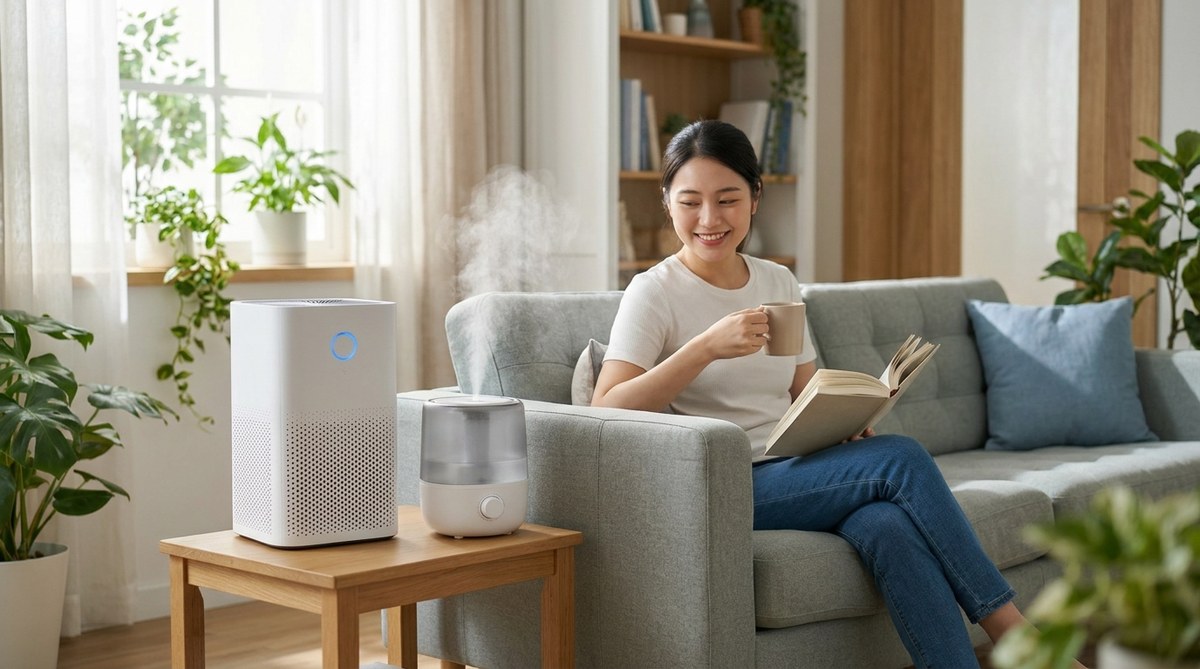
Add a humidifier to the room. This is the most direct fix. A cool mist humidifier works well alongside an air purifier. Place them on opposite sides of the room so they do not interfere with each other. The humidifier adds moisture, and the purifier keeps the air clean. Many people run a humidifier in the bedroom at night and use a purifier in the living room during the day.
Use your purifier on a lower fan speed. Unless you are dealing with wildfire smoke or heavy allergens, you do not need the highest setting. Lower speeds move less air, which reduces the evaporative cooling effect. Your lungs will thank you.
Set your purifier to auto mode if it has one. Smart purifiers adjust fan speed based on air quality. They run harder only when needed. That keeps airflow lower during clean periods.
Monitor your home’s humidity with a smart hygrometer. Some connect to your phone and alert you when levels drop below 30% or rise above 50%. This takes the guesswork out of the equation.
Add moisture to the air naturally. Houseplants release water vapor. A bowl of water near a heat source will evaporate slowly. Even drying clothes on a rack indoors adds moisture. These methods are gentle and steady.
“An air purifier does not remove moisture from the air. It only moves air. If you feel dry, check your heating system first. A simple hygrometer will tell you the truth.” * John, HVAC technician with 15 years of experience
When you might actually need a dehumidifier instead
Sometimes the problem is the opposite. If your hygrometer shows humidity above 60%, you have too much moisture. High humidity encourages mold, dust mites, and musty smells. In that case, you actually want to reduce moisture.
An air purifier can help with mold spores and allergens, but it cannot lower humidity. For that, you need a dehumidifier. Running both a dehumidifier and an air purifier is a powerful combination for damp basements or humid climates. You can learn more about choosing the right equipment in our guide on choosing the best dehumidifier for your home.
If your humidity is in the healthy range but the room still feels dry, focus on adding moisture, not removing it.
A simple routine for comfortable indoor air
You do not need a complex system. Try this daily routine.
- Check your hygrometer in the morning. If it is below 30%, turn on a humidifier.
- Run your air purifier on auto mode or low speed during the day.
- If you feel dryness in your throat or eyes, take a quick break outside or sip water.
- In winter, keep your thermostat at a moderate temperature. Lower temperatures reduce the drying effect of heating.
- Once a week, water your houseplants and enjoy the natural humidity boost they provide.
This routine keeps your air clean and comfortable without overcomplicating things.
The bottom line on purifiers and dry air
An air purifier is not a dehumidifier. It does not dry out the air by design. The feeling of dryness usually comes from increased airflow, your heating or cooling system, or seasonal changes. You can solve it by monitoring humidity and adding moisture when needed.
If you are still unsure, check out our article on is your air purifier making your home too dry for more specific scenarios. And if you are shopping for a new purifier, our buying guide for air purifiers in 2026 covers the features that matter most for comfort.
Keep breathing easy without the scratchy throat
You deserve clean air that feels good. Now you know that your air purifier is not the enemy. The real fix is simple: measure your humidity, add moisture when needed, and run your purifier at a sensible speed. Your home will feel fresher, your skin will thank you, and you can enjoy the benefits of purified air without the discomfort. Try the hygrometer test tonight. You might be surprised at what you learn.