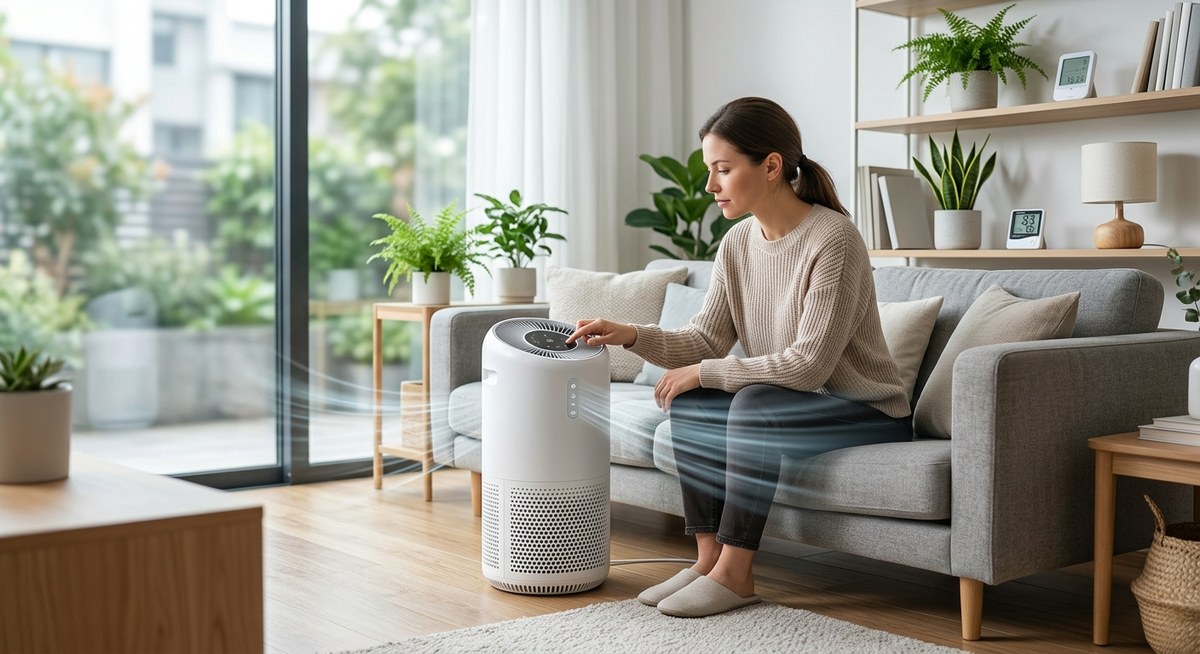
You spent good money on an air purifier to breathe cleaner air. But maybe it’s not working as well as you hoped. You might be making simple mistakes that cut its performance in half. The good news? These errors are easy to fix. Let’s walk through the most common air purifier mistakes and how to get the most out of your machine starting today.
Most homeowners unknowingly reduce their air purifier’s effectiveness by placing it in corners, forgetting filter changes, or picking the wrong size for their room. Avoid these seven common errors to improve indoor air quality, cut energy waste, and extend your purifier’s life. Small changes like moving the unit away from walls and running it on high during peak allergy season make a real difference.
The Wrong Spot Can Ruin Everything
You want your purifier out of sight, so you tuck it behind the couch or in a corner. That’s mistake number one. Air purifiers need clear airflow on all sides. When you block the intake or outlet, the machine struggles to pull in dirty air and push out clean air.
Where should you place it? At least 12 to 18 inches from any wall or furniture. Ideally, put it in the center of the room or near the source of pollutants. For example, if you have a cat that sheds on the living room rug, place the purifier near that area. If you struggle with seasonal allergies, put it in your bedroom and run it while you sleep.
“Think of an air purifier like a ceiling fan: it needs space to circulate. A unit shoved into a corner is like a fan with a blanket over it. It’ll still spin, but it won’t move air effectively.” — Indoor air quality specialist
Filter Fumbles That Cost You Clean Air
Your filter is the heart of the machine. Ignoring it is like never changing the oil in your car. Here’s what happens when you skip maintenance:
- The filter gets clogged with dust, pet dander, and pollen.
- Airflow drops dramatically, making the purifier work harder and use more electricity.
- Mold and bacteria can grow on a wet, neglected filter, blowing more junk into your room.
How often should you replace it? Check the manufacturer’s recommendation. Most HEPA filters last 6 to 12 months. Pre-filters may need cleaning every month. Mark it on your calendar or set a phone reminder.
Here’s a simple three-step process to keep your filter in top shape:
- Turn off and unplug the purifier.
- Open the front cover and remove the filter.
- Tap off loose dust (outdoors) and vacuum the pre-filter if reusable. If it’s a combined HEPA filter, just replace it per schedule.
Running It With Windows Open — Or Sealed Shut Too Tight
This one trips up a lot of people. You want fresh air, so you open the windows wide and let the purifier run. But an open window lets in more outdoor pollutants like pollen, smoke, and exhaust. The purifier will keep working overtime trying to clean an infinite outdoor supply.
On the flip side, sealing everything tight all the time can trap indoor VOCs from cleaners, paints, and cooking. The best balance: run your purifier with windows closed during high pollen days, and open windows for a few minutes each morning to let stale air out. Then close up and let the purifier do its job.
Size Matters More Than You Think
Buying the cheapest or smallest purifier for your room is a classic error. A unit rated for 150 square feet won’t clean a 400 square foot living room. You’ll hear the fan roaring but the air stays dirty.
Check the CADR (Clean Air Delivery Rate) rating. For a room of 300 square feet, look for a CADR of at least 200 for smoke, dust, and pollen. If you have high ceilings or an open floor plan, you may need two units or a larger model. For guidance, read our top tips for choosing the right air purifier to reduce allergens and pollutants.
| Mistake | Why It Hurts | The Fix |
|---|---|---|
| Placing near a wall or in a corner | Restricts airflow, reduces cleaning power by 50% | Keep 12-18 inches clearance all around |
| Skipping filter changes | Clogged filter = low airflow + possible mold | Replace HEPA every 6-12 months; clean pre-filter monthly |
| Running with windows open during allergy season | New contaminants keep entering, unit never catches up | Close windows while purifying; ventilate briefly in mornings |
| Buying too small for the room | Unit runs constantly but never cleans fully | Match CADR to room size; consider a larger model |
| Ignoring the pre-filter | Large particles clog the main filter faster | Vacuum or wash pre-filter every 2-4 weeks |
| Only running it on low speed | Low settings are quieter but move little air | Run on medium or high during waking hours |
| Relying on the purifier alone | Doesn’t address dust sources like carpets and pets | Vacuum, dust, and control humidity too |
The Pre-Filter: The Unsung Sidekick
Many units have a washable pre-filter that catches big stuff like hair and lint. People forget to clean it. A dirty pre-filter acts like a clogged screen door, forcing the main HEPA filter to work too hard. This shortens the HEPA’s life and raises your electricity bill.
Fix it: Check your manual. Usually, you can vacuum the pre-filter or wash it with mild soap and water. Let it dry completely before putting it back. Do this every two to four weeks, or more often if you have pets.
Running It Only at Night on Low
You want peace and quiet while you sleep, so you set the purifier to low. That’s understandable. But low speed moves very little air. The unit might run all night and only clean a tiny bubble around itself.
Better approach: run it on medium or high while you’re awake and moving around the house. Then switch to low or sleep mode just before bed. Many modern purifiers have a quiet night mode that balances noise with decent airflow. Check out our guide to maximizing air purifier effectiveness for a healthier home in 2026 for more tips.
Thinking One Machine Fixes Everything
An air purifier is a powerful tool, but it’s not magic. If your home is dusty, you have wall-to-wall carpeting, and you rarely vacuum, the purifier will fight a losing battle. Similarly, high humidity can encourage mold and dust mites — a purifier doesn’t control humidity.
Pair your purifier with good habits:
– Vacuum weekly with a HEPA filter vacuum.
– Dust surfaces with a damp cloth to trap particles.
– Keep humidity between 30% and 50% using a dehumidifier if needed.
– Wash bedding in hot water to kill dust mites.
If you struggle with both air quality and moisture, check out our tips for choosing the best dehumidifier for your home.
Putting It All Together: Your Air Purifier in 2026
You don’t have to master all of these fixes at once. Start with one: move your purifier to a better spot. Next, check your filter and see if it’s time for a replacement. Then adjust your running schedule. Small changes lead to noticeably cleaner air.
Many people see a big drop in their allergy symptoms after correcting just these few errors. And your purifier will last longer, too. For more ideas on creating a healthier indoor environment, see our strategies for maintaining a fresh and healthy indoor environment.
Now take a walk around your home. Look at your purifier. Is it tucked in a corner? When did you last swap the filter? Is it the right size for the room? You have the knowledge to fix these mistakes today. Your lungs will thank you.