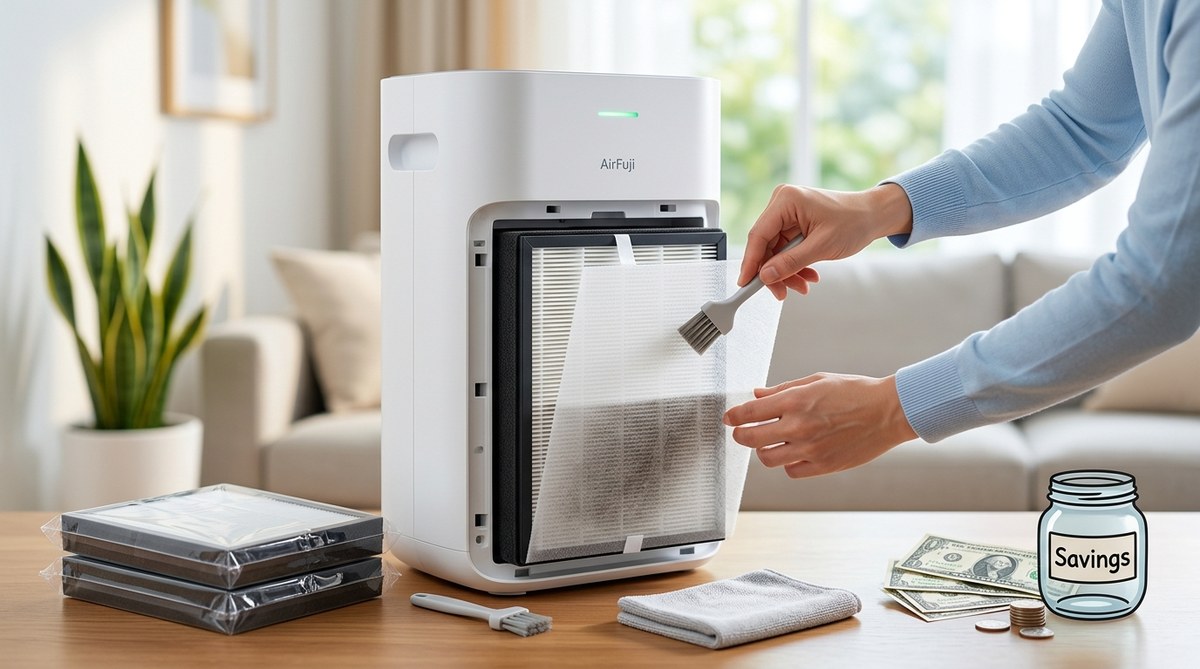
Your air purifier works hard every day to pull dust, pollen, pet dander, and smoke out of the air you breathe. That little workhorse does not come cheap. Replacement filter packs can run from $30 to well over $100 a pop, and if you swap them out every three months, you are spending hundreds of dollars a year just to keep the air clean. But here is the good news: with a few intentional habits, you can extend air purifier filter life significantly and keep that cash in your pocket. This guide walks you through the exact steps to get the most out of every filter while still maintaining healthy indoor air quality.
The single most effective way to extend air purifier filter life is to vacuum or rinse the pre-filter every two to four weeks. Combine that with smart placement away from clutter, running the unit on a lower fan speed when possible, and replacing the main HEPA filter only when it truly needs it and you can double or triple the time between costly filter changes. Small changes, big savings.
Why Filters Clog So Fast
The enemy of every air purifier filter is fine particulate matter. Household dust, skin flakes, pollen, pet hair, and cooking grease all end up trapped in the filter media. The tighter the filter (HEPA and carbon layers), the faster it loads up. A 2026 study by the American Lung Association showed that the average home in the United States accumulates over 40 pounds of dust per year per 1,500 square feet. That is a lot of junk flying into your purifier.
Most people wait until the filter indicator light turns red before even thinking about cleaning. By that point, the filter is already saturated, airflow has dropped, and the motor is working harder, wasting electricity. The trick is to stop the buildup before it starts.
The Pre-Filter Secret: Your First Line of Defense
Nearly every modern air purifier includes a washable pre-filter. That is a coarse mesh that traps large particles (hair, lint, visible dust bunnies) before they reach the expensive HEPA media. If you neglect the pre-filter, the main filter clogs in weeks instead of months.
How to care for your pre-filter:
- Remove it once a month (more often if you have pets or live in a dusty area).
- Vacuum both sides with a brush attachment.
- If it is labeled washable, rinse it under lukewarm water until the water runs clear.
- Let it dry completely before putting it back. Never reinsert a wet filter.
- For permanent electrostatic pre-filters, wash with mild soap and air dry.
By keeping the pre-filter clean, you can extend air purifier filter life by 50 to 75 percent. That alone can turn a six-month replacement cycle into a year or more.
Smart Placement Extends Filter Life
Where you put your air purifier matters just as much as how you clean it. Place it in the wrong spot and you force the filter to fight against obstacles that block airflow and dump extra junk into the intake.
Do this:
- Keep the purifier at least 12 to 18 inches away from walls, furniture, and curtains.
- Place it in the center of the room or near the source of pollutants.
- Avoid corners where dust accumulates and air circulation is poor.
- Put it on a hard floor rather than a carpet (carpets shed fibers and trap dust).
- Do not set it next to a kitchen or bathroom where humidity and grease clog filters faster.
If you want to see how placement affects real performance, the guide on the best air purifier placement for maximum efficiency in every room has detailed diagrams for common floor plans.
The Two-Week Cleaning Routine
Most filter life shortens because people forget to clean the pre-filter. Build a simple routine:
- Every two weeks, check the pre-filter. If it looks gray or fuzzy, vacuum it.
- Once a month, wipe down the exterior vent grilles and intake areas with a microfiber cloth.
- Every three months, lift the main filter and check for obvious clogs (dark, matted, or smelly means it is time).
- Replace the main filter only when you notice reduced airflow, an increase in noise, or the indicator tells you.
This cycle keeps your filter breathing easy. If you skip step one, you will shorten the main filter life by several months.
Common Mistakes That Ruin Filters
Not all maintenance is helpful. Some well-intentioned actions actually damage the filter or reduce its effectiveness.
| Mistake | Why It Hurts | Better Alternative |
|---|---|---|
| Vacuuming the HEPA filter | HEPA fibers are delicate and can tear or become less dense. | Only vacuum the pre-filter. Replace HEPA when needed. |
| Washing a non-washable filter | Water destroys the electrostatic charge and collapses the media. | Check the manual. If it says “replace only,” do not wash. |
| Running on Turbo 24/7 | High fan speed pulls more air through faster, loading the filter twice as fast. | Use Auto or Medium speed most of the time; use Turbo only for quick clearing. |
| Placing the purifier near a window or door | Outdoor dust, pollen, and humidity enter directly into the filter. | Keep it away from drafts and open windows. |
| Ignoring the indicator light until red | By the time the light turns red, the filter may already be overstressed. | Clean pre-filter at the first sign of a yellow light. |
Remember, a clean filter works better, quieter, and longer. The common air purifier mistakes article lists several more pitfalls that can cut filter life in half.
Real-World Savings: The Math of Filter Extenders
Let us put numbers on it. Say you own a mid-range air purifier with a replacement filter costing $50. The manufacturer says to swap it every six months. That is $100 per year.
If you diligently clean the pre-filter twice a month and use medium speed, you can push that same filter to 12 or even 18 months. In one year, you buy just one filter instead of two, saving $50. Over five years, that is $250 saved on filters alone, not counting the electricity you save because the motor runs less hard.
“The number one question I get from customers is, ‘How do I stop my filters from costing so much?’ The answer is always the same: stop ignoring the pre-filter. It is the only part you are supposed to clean, and most people never do.” — Rachel K., HVAC technician and air quality specialist.
When to Actually Replace the Filter
Stretching filter life does not mean running a filthy filter for two years. You need to know the signs that a filter is truly spent.
Signs it is time to replace:
- Airflow feels weak even on high fan speed.
- The unit hums louder than usual because the motor is straining.
- The filter indicator light stays red after cleaning the pre-filter.
- You notice a musty or sour smell coming from the vents.
- Visible dust is settling on surfaces again (bypass means the filter is saturated).
If you hit any of these, do not keep pushing. A clogged filter not only fails to clean the air, it can also allow bacteria to grow on trapped organic matter. For more on recognizing performance drops, see why your air purifier isn’t working as well as it should.
A Quick Note on Carbon Pre-Filters
Some purifiers have a separate carbon pre-filter layer for odor removal. These are usually disposable or washable. Carbon loses its ability to absorb gases over time, but if you vacuum the dust off the surface, the carbon can last longer. Just be aware that once it smells like the room (or stops removing odors), it is done regardless of how much dust you clean. Replace carbon pre-filters every six to eight months for best odor control.
The Environmental Angle
Every filter you discard ends up in a landfill. Most HEPA filters contain fiberglass or synthetic fibers that do not biodegrade. By extending the life of each filter, you reduce waste. Over the course of a decade, a household that changes filters every 6 months throws away 20 filters. A household that changes every 12 months throws away only 10. That is half the plastic and media waste. Small changes add up.
Create a Filter-Friendly Home Environment
You can also reduce the load on your purifier by managing household dust at the source.
- Vacuum carpets and rugs twice a week with a HEPA vacuum.
- Use a damp mop on hard floors to trap dust instead of sweeping it into the air.
- Wash bedding in hot water weekly to control dust mites.
- Keep windows closed during high pollen days.
- Run a dehumidifier in damp basements to prevent mold spores from becoming airborne.
When you lower the baseline dust level, your air purifier filter does not have to work as hard. That directly improves indoor air quality and makes every filter last longer.
Final Tips for Maximum Filter Life
Before you go, here is a quick checklist to bookmark:
- Clean the pre-filter every two weeks (vacuum or rinse).
- Place the purifier in an open area, not a corner.
- Use Auto mode or Medium speed as your default.
- Check the main filter every three months for visible dirt.
- Replace only when airflow, noise, or odor tell you it is time.
- Keep doors and windows closed when the purifier is running near them.
By following these steps, you can extend air purifier filter life to its absolute maximum. Your wallet, your lungs, and the planet will thank you.
Take Control of Your Filter Costs Today
Filter replacements are the hidden cost of owning an air purifier. But they do not have to drain your budget. Start with a simple habit: put a recurring reminder on your phone to check the pre-filter on the first and fifteenth of every month. That two-minute task is the highest-impact thing you can do. Pair it with smart placement and moderate fan speed, and you will stretch every filter to its limit. Breathe clean air, save money, and stop throwing away filters before their time. You have everything you need to make it happen.