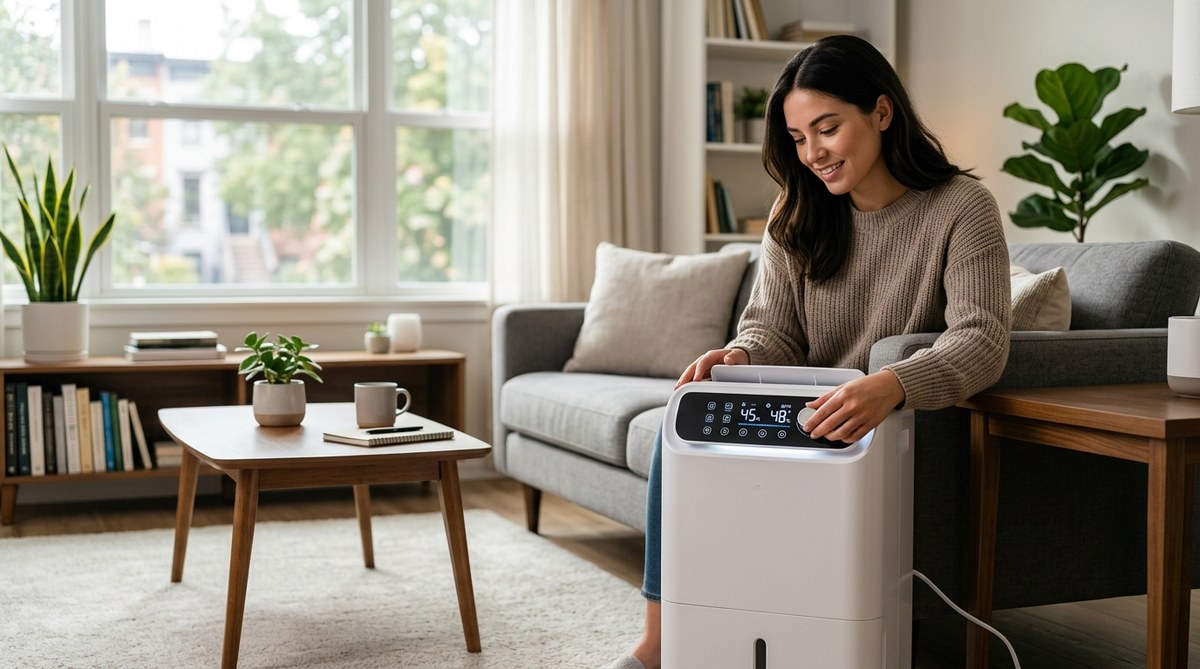
Maintaining the right indoor humidity can make your home much more comfortable. If you’ve ever felt dampness, stuffiness, or noticed mold and dust mites, your dehumidifier might just need a simple adjustment. Setting your device correctly is key to creating a healthier, more pleasant living space. Yet, many homeowners overlook the importance of fine-tuning their dehumidifier settings. The good news is that with a few easy steps, you can optimize your dehumidifier for maximum comfort and efficiency.
Adjusting your dehumidifier to the right humidity level helps prevent excess moisture, mold, and dust mites. Proper settings improve comfort and save energy, making your indoor environment healthier and more enjoyable.
Understanding the ideal humidity range for comfort
The first step in setting your dehumidifier correctly is understanding what humidity level creates a comfortable and healthy indoor climate. Experts generally recommend maintaining indoor humidity between 45 and 50 percent. This range feels comfortable to most people, prevents mold growth, and minimizes dust mites. When humidity drops below 40 percent, air can become too dry, causing skin and respiratory discomfort. Conversely, humidity above 55 percent can lead to dampness, mold, and an increase in allergens.
Practical steps to set your dehumidifier for optimal comfort
Getting your dehumidifier dialed in is straightforward once you follow these steps:
1. Measure your current indoor humidity
Before adjusting your device, you need to know your current humidity levels. Invest in a reliable hygrometer, which is an affordable device that measures relative humidity. Place it in a central room away from windows or doors. Readings will inform you whether you need to increase or decrease your dehumidifier’s settings.
2. Set the target humidity level
Most dehumidifiers have a control panel with a humidity setting. Aim for a target level between 45 and 50 percent. To set this:
- Turn on your dehumidifier.
- Adjust the humidity control to the desired percentage.
- Give the unit time to stabilize, usually a few hours, and check the hygrometer again.
3. Use the dehumidifier’s features effectively
Many models have features like auto mode, continuous drainage, or fan speed controls. To optimize comfort:
- Use auto mode if available, which automatically maintains your set humidity.
- Connect the drain hose for continuous operation, so you don’t have to empty water tanks manually.
- Set a fan speed that balances noise and efficiency—higher speeds dehumidify faster but may be noisier.
4. Monitor and adjust as needed
Indoor humidity can fluctuate based on weather, seasons, and household activities. Regularly check your hygrometer and tweak your dehumidifier’s setting if humidity drifts outside the recommended range. Consider adjusting during humid seasons or in areas prone to dampness, like basements or bathrooms.
Common mistakes that can hinder your dehumidifier’s performance
Even with the right settings, some habits or errors can reduce comfort and efficiency. Here is a quick comparison:
| Technique or Mistake | Effect | How to Fix |
|---|---|---|
| Setting humidity too low (below 40%) | Dry air, skin irritation | Raise the humidity target to 45-50% |
| Forgetting to clean the filter | Reduced airflow, poor performance | Clean filters monthly as per manufacturer instructions |
| Running the dehumidifier constantly without monitoring | Wasted energy, over-drying | Use auto mode or set timers based on humidity readings |
| Placing the unit near sources of moisture or heat | Ineffective dehumidification | Position away from windows, vents, or heat sources |
A tip from indoor air quality experts: “Regularly checking your humidity levels and adjusting your dehumidifier accordingly will keep your home comfortable and prevent issues like mold or dust mites from taking hold.”
Techniques for better humidity control
- Keep windows and doors closed during humid days to prevent outside moisture from entering.
- Seal leaks around windows and doors to reduce external humidity infiltration.
- Use exhaust fans in bathrooms and kitchens to remove excess moisture.
- Maintain good ventilation in damp areas like basements and laundry rooms.
Addressing common challenges with dehumidifier settings
If your home remains damp despite your efforts, consider the following:
- Your dehumidifier may be too small for the space. Larger or more powerful models can handle bigger areas.
- Outdoor humidity might be too high. In such cases, running the unit continuously or using supplemental ventilation can help.
- The unit might need maintenance. Regular cleaning and filter replacement keep performance optimal.
| Technique | Common mistake | Correct approach |
|---|---|---|
| Setting too low | Over-drying | Keep humidity around 45-50% |
| Ignoring maintenance | Reduced efficiency | Schedule regular cleaning |
| Not measuring humidity | Guessing settings | Use a hygrometer to guide adjustments |
Expert advice on dehumidifier settings
“The best way to ensure indoor comfort is to monitor your humidity regularly and adjust your dehumidifier’s settings accordingly. Don’t rely solely on the device’s default mode. Proper placement and maintenance are equally important to keep your home dry and cozy.”
Why fine-tuning your dehumidifier makes a difference
Adjusting your dehumidifier isn’t just about comfort. It also impacts your health and energy bills. Too much humidity can trigger allergies, promote mold growth, and cause musty odors. On the other hand, overly dry air can cause skin irritation and respiratory issues. Finding that sweet spot between 45 and 50 percent keeps your indoor environment balanced and healthy.
Final tips for maintaining ideal indoor humidity
- Regularly check your hygrometer, especially during seasonal changes.
- Adjust your dehumidifier settings to match outdoor conditions.
- Keep doors and windows closed during humid weather.
- Schedule routine maintenance for your unit to ensure longevity and performance.
Making your home a comfortable oasis
Getting the perfect dehumidifier settings is simple once you understand your space and the device’s features. Focus on measuring humidity, setting a target of 45 to 50 percent, and monitoring regularly. Small adjustments can lead to big improvements in comfort and indoor air quality. With a little attention, your home can stay dry, mold-free, and inviting year-round.
Remember, creating a comfortable living space is a continuous process. Stay attentive to your indoor environment and tweak your dehumidifier settings as needed. Your efforts will pay off with a healthier, more enjoyable home for you and your loved ones.