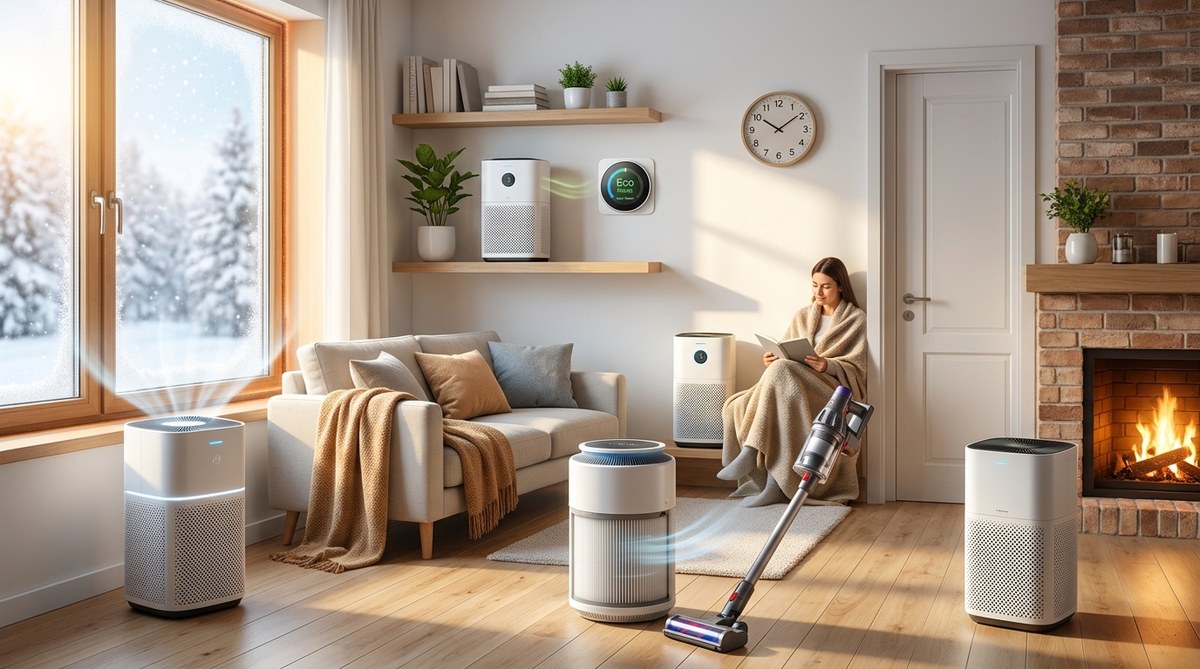
Winter is here. The windows are sealed tight. The heating is running more than you would like. And your air purifier is pulling double duty to keep the air clean. That combination can hit your wallet hard. It does not have to be that way. You can keep your home comfortable and your air fresh without watching your electricity bill spike. The secret is knowing a few smart hacks that work with your purifier, not against it. Let us walk through five practical ways to save money this season.
Running an air purifier in winter does not have to drain your budget. By adjusting fan speed to match real time needs, sealing your home against drafts, cleaning pre filters monthly, using a timer or smart plug, and choosing the right unit size for each room, you can cut energy use by up to 30 percent. These five air purifier electricity bill hacks keep your indoor air quality high while your monthly costs stay low.
Why Winter Makes Your Air Purifier Work Harder
Winter creates a perfect storm for higher energy use. Your home is sealed up to keep the cold out. That means less fresh air circulation. Dust, pet dander, and cooking particles build up faster. Your air purifier has to run longer and often at higher speeds to keep up. At the same time, your heating system is running, which adds to your overall electricity load.
Many people make the mistake of running their purifier on the highest setting all day because they think it is the only way to get clean air. That is not true. You can be smart about how and when you run it. The goal is to match the purifier’s workload to what your home actually needs. When you do that, you save energy without sacrificing air quality.
Hack 1: Use the Auto Mode or Set a Custom Fan Schedule
The biggest waste of electricity comes from running your purifier on high when the air is already clean. Most modern air purifiers have an auto mode that uses a sensor to detect particle levels. When the air is dirty, the fan speeds up. When the air is clean, the fan slows down. This is the single easiest way to cut your energy use.
If your purifier does not have an auto mode, you can create your own schedule. Here is a simple process to follow:
- Identify peak pollution times. Cooking dinner, vacuuming, and having guests over all stir up particles. Run your purifier on high during those times.
- Set lower speeds during quiet hours. When you are sleeping or away from home, switch to low or medium. The air does not need aggressive cleaning then.
- Use a smart plug for control. Plug your purifier into a smart outlet and set it to run on high for two hours after cooking, then drop to low for the rest of the night.
This approach lets your purifier work hard when it matters and coast when it does not. You can learn more about matching your unit to your home’s needs in our guide on choosing the right air purifier to reduce allergens and pollutants.
Hack 2: Seal Your Home to Reduce the Load
Your air purifier is fighting a losing battle if your home is drafty. Cold air seeps in through gaps around windows and doors. That air brings in outdoor pollutants like pollen and dust. Your purifier then has to work harder to clean that incoming air. It is like trying to fill a bucket with a hole in the bottom.
Take a weekend to do a simple draft check. Walk around your home with a lit incense stick or a piece of tissue paper. Hold it near window frames, door edges, and electrical outlets. If the smoke or paper moves, you have a leak. Seal those gaps with weatherstripping or caulk. It is a low cost fix that pays off all winter.
When your home is sealed properly, your purifier does not have to run as often or as fast. That means lower electricity use. Plus, your heating system will also run less because you are not losing warm air. It is a double win for your wallet. For more ways to keep your indoor environment healthy, check out these simple tips for a healthier home.
Hack 3: Clean the Pre-Filter Every Two Weeks
A dirty pre-filter is like a clogged nose. Your purifier has to work much harder to pull air through it. That extra effort uses more electricity. And the harder the fan works, the more energy it consumes.
Most air purifiers have a washable pre-filter that catches large particles like dust and pet hair. This filter is easy to clean. Here is what you need to do:
- Vacuum the pre-filter every two weeks during winter. Use the brush attachment on your vacuum to remove surface dust.
- Wash it with water if the manufacturer allows it. Let it dry completely before putting it back.
- Check the main HEPA filter every month. If it looks dark or clogged, replace it according to the schedule.
A clean pre-filter can reduce your purifier’s energy draw by 10 to 15 percent. That adds up over a cold season. If you want to understand more about why this matters, read our article on why your air purifier needs a pre-filter and how to clean it.
Hack 4: Place Your Purifier in the Right Spot
Where you put your air purifier has a huge impact on how efficiently it runs. A common mistake is tucking it behind furniture or in a corner. That blocks the airflow. The purifier has to push harder to circulate air, which uses more electricity.
Follow these placement rules:
- Keep it at least 12 inches away from walls and furniture on all sides.
- Place it in the room you use most. There is no point cleaning the air in a guest bedroom you never enter.
- Avoid placing it near heat sources like radiators or space heaters. Hot air can mess with the sensor readings and make the fan run unnecessarily.
When your purifier can breathe, it works more efficiently. It cleans the room faster and can then drop to a lower speed. That is a direct energy saving. For a full room by room breakdown, see our complete guide to air purifier placement in 2026.
Hack 5: Use a Timer or Smart Plug for Nighttime Savings
You do not need your air purifier running at full power while you sleep. Your body is less active at night, so you are not stirring up as many particles. Plus, your bedroom door is usually closed, which means the air volume is smaller and easier to clean.
Set your purifier to run on low speed for an hour before bed. That gives it time to clean the air while you brush your teeth and get ready. Then either turn it off or switch to the lowest setting for the night. If your purifier has a built in timer, use it. If not, a smart plug is a great alternative.
“Using a timer is one of the simplest ways to cut energy costs. Most people run their purifier all night out of habit, not necessity. A clean room only needs maintenance cleaning, not full power.” – HVAC efficiency specialist
A smart plug costs around 15 dollars and lets you schedule your purifier from your phone. You can set it to turn off at 11 PM and turn back on at 7 AM. That is eight hours of energy savings every single night.
| Technique | Energy Savings | Effort Level |
|---|---|---|
| Auto mode or custom schedule | Up to 25% | Low |
| Sealing drafts | 10 to 20% | Medium |
| Cleaning pre filter biweekly | 10 to 15% | Low |
| Optimal placement | 5 to 10% | Low |
| Timer or smart plug at night | 15 to 20% | Low |
Common Mistakes That Waste Energy
Even with good intentions, people often fall into traps that drive up their electricity bill. Here are the most common ones to avoid:
- Running the purifier 24/7 on high. This is the number one waste. Use auto mode or a schedule instead.
- Ignoring filter changes. A clogged HEPA filter makes the fan work much harder. Replace it on time.
- Placing the unit in a huge open space. If your purifier is rated for 300 square feet but you put it in a 600 square foot living room, it will never catch up. It will run at full speed constantly.
- Blocking the intake or outlet. Furniture, curtains, and even carpet can block airflow. Keep the area clear.
If you suspect you might be making some of these errors, take a look at our list of common air purifier mistakes to see if you can tighten up your routine.
How to Pick the Right Purifier for Winter Energy Savings
If you are shopping for a new air purifier this winter, energy efficiency should be a top factor. Look for units that are Energy Star certified. These models use about 40 percent less energy than standard models. Also pay attention to the CADR (Clean Air Delivery Rate). A higher CADR means the unit cleans the room faster, so it can spend more time on low speed.
Size matters too. A unit that is too small for your room will struggle and use more energy. A unit that is too large will cycle on and off too often, which can also waste power. Measure your room’s square footage and match it to the purifier’s recommended room size. For help with this, read our guide on how to calculate the right air purifier size for every room.
A Simple Weekly Routine to Keep Costs Low
You do not need to overhaul your life to save money. A small weekly habit can make a big difference. Here is a bulleted list of what a good weekly routine looks like:
- Check the pre filter and vacuum it if it looks dusty.
- Make sure nothing is blocking the purifier’s intake or outlet.
- Confirm your timer or smart plug schedule is still active.
- Look at the air quality indicator. If it shows green most of the time, you can lower the fan speed.
That is five minutes a week. It will keep your purifier running efficiently and your electricity bill under control.
Your Path to Lower Bills and Cleaner Air
You do not have to choose between clean air and a reasonable electricity bill. These five air purifier electricity bill hacks are designed to give you both. By using auto mode, sealing drafts, cleaning the pre filter, placing the unit correctly, and using a timer, you can cut your energy use significantly.
Winter is already expensive enough with heating costs. Your air purifier does not need to add to that burden. Take a few minutes this week to apply one or two of these tips. You will notice the difference in your next bill. And you will breathe easier knowing your air is clean without wasting energy.
For more ideas on keeping your home healthy and efficient, check out our article on how to maximize air purifier effectiveness for a healthier home in 2026. Your wallet and your lungs will thank you.