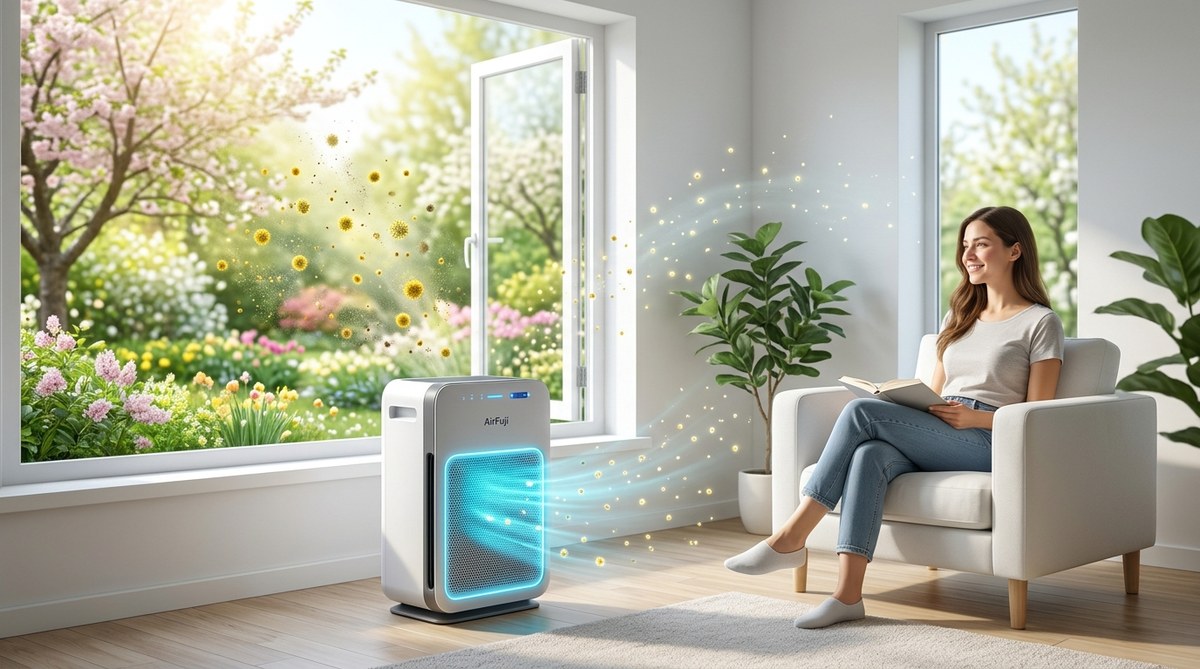
You bought an air purifier hoping it would finally stop the morning sneeze attacks. Maybe it helped a little at first. But as pollen season ramped up in 2026, you still found yourself reaching for tissues and antihistamines. The truth is, many people use air purifiers wrong. They place them in a corner, run them on low, and expect magic. The real connection between your air purifier and seasonal allergies is more subtle, more scientific, and far more powerful than most marketing lets on. Understanding this hidden relationship can turn a mediocre machine into your strongest defense against ragweed, grass pollen, and tree allergens.
The hidden connection between air purifiers and seasonal allergies lies in how your machine interacts with particle size, air circulation patterns, and your body’s inflammatory response. Most people focus only on removing visible dust, but the real relief comes from targeting microscopic pollen fragments and ultrafine particles that trigger histamine reactions. Proper placement, filter type, and run time matter more than the price tag. A true HEPA filter combined with a high CADR rating can reduce indoor allergen levels by up to 99 percent when used correctly, but only if you avoid common mistakes like closing windows at the wrong time or neglecting pre-filters.
Why Standard Allergy Treatments Fall Short
You have probably tried nasal sprays, antihistamines, and maybe even allergy shots. These treatments work by calming your body’s reaction after you breathe in allergens. They do nothing to stop the particles from entering your home in the first place. That is where the hidden connection between air purifiers and seasonal allergies becomes critical.
Your home is not a sealed bubble. Pollen drifts through open windows, clings to your clothes, and rides in on your dog’s fur. Once inside, these particles settle on carpets, furniture, and bedding. Every time you walk across the room or fluff a pillow, you send them floating back into the air. An air purifier that runs continuously can capture these particles before they reach your nose. But the type of filter matters more than most people realize.
The Science of Particle Size and Your Immune System
Not all allergens are created equal. Pollen grains are relatively large, usually between 10 and 100 microns. A standard HEPA filter catches those easily. But here is the part most guides skip: pollen can break into smaller fragments when it dries out or gets crushed. These fragments, sometimes smaller than 2.5 microns, can travel deeper into your lungs and trigger stronger allergic responses.
A true HEPA filter captures 99.97 percent of particles down to 0.3 microns. That covers whole pollen grains and those tiny fragments. However, many budget air purifiers use “HEPA-like” or “HEPA-type” filters that do not meet the same standard. If your machine lacks a genuine HEPA filter, you might be letting those small, reactive fragments slip right through.
Expert advice: Look for a purifier that clearly states “True HEPA” on the box. Avoid terms like “HEPA-style” or “HEPA-type.” These are marketing labels, not performance guarantees. A true HEPA filter is your best weapon against the microscopic particles that drive seasonal allergies.
The Three-Step Process for Maximum Allergy Relief
To unlock the hidden connection between your air purifier and seasonal allergies, follow this numbered process. Each step builds on the last.
-
Choose the right filter for your dominant allergen. If tree pollen is your main trigger in spring, focus on a True HEPA filter with a high CADR for pollen. If mold spores bother you in fall, add a carbon pre-filter to capture VOCs and odors that can worsen respiratory sensitivity.
-
Place the purifier in the room where you spend the most time. For most people, that is the bedroom. Position the intake side facing the center of the room, not against a wall. This allows the machine to pull in the maximum volume of air and cycle it through the filter. Keep at least 18 inches of clearance on all sides.
-
Run the purifier on high for at least 30 minutes before you sleep. This clears the room of accumulated allergens. After that, switch to a lower, quieter setting for overnight operation. Consistency matters more than peak power. Running the unit 24 hours a day during allergy season is far more effective than turning it on only when symptoms appear.
Common Mistakes That Sabotage Your Air Purifier
Many people unknowingly reduce their machine’s effectiveness. Here is a bulleted list of mistakes to avoid:
- Closing the windows while running the purifier but forgetting to seal gaps around doors and windowsills where pollen seeps in
- Placing the purifier in a corner where airflow is blocked by furniture or curtains
- Forgetting to clean or replace the pre-filter, which causes the main HEPA filter to clog faster
- Running the purifier only during the day when you are at work, leaving it off during peak pollen hours in the early morning and evening
- Using a unit that is too small for the room size, which forces the machine to work harder and capture less
Filter Types and Their Real-World Impact
Not every air purifier technology works the same way for seasonal allergies. The table below breaks down the most common types and how they perform against pollen, dust mites, and mold spores.
| Filter Type | Captures Pollen | Captures Mold Spores | Captures Ultrafine Particles | Ozone Risk |
|---|---|---|---|---|
| True HEPA | Yes | Yes | Yes | None |
| HEPA-type | Partial | Partial | Partial | None |
| Ionizer | Some | Some | Some | Moderate |
| UV-C | No | Yes (with contact) | No | Low |
| Carbon | No | No | No | None |
True HEPA filters are the clear winner for seasonal allergies. Ionizers and UV-C units can help with certain pollutants, but they should not be your primary defense against pollen. Some ionizers produce ozone, which can irritate already sensitive airways. If you have allergic rhinitis, ozone exposure can make your symptoms worse, not better.
How Humidity Plays a Hidden Role
The connection between air purifiers and seasonal allergies does not stop at filtration. Indoor humidity levels directly affect how allergens behave. When humidity rises above 60 percent, dust mites thrive and mold spores multiply. When it drops below 30 percent, your nasal passages dry out, making them more vulnerable to irritation from any particles that slip through.
A good air purifier can help, but pairing it with a dehumidifier or humidifier gives you better control. If you live in a humid climate like the Gulf Coast or the Southeast, running a dehumidifier alongside your purifier can reduce the allergen load significantly. For more on balancing moisture levels, check out our guide on understanding dehumidifier settings to optimize indoor comfort.
The Timing Factor That Changes Everything
Seasonal allergies follow predictable patterns. Tree pollen peaks in early spring. Grass pollen surges in late spring and early summer. Ragweed dominates from late summer through fall. Many people run their air purifier year round at the same speed, but adjusting your strategy by season can make a real difference.
During peak pollen weeks, run your purifier on high during the hours when pollen counts are highest, usually between 5 AM and 10 AM. Keep windows closed during that window. If you need fresh air, open windows later in the afternoon when pollen counts drop. This simple timing shift amplifies the hidden connection between your air purifier and seasonal allergies by reducing the volume of particles the machine has to process.
What the Research Actually Says
A 2026 multicenter study published in a respiratory journal examined the effects of air purifiers on patients with allergic rhinitis. Participants who used a True HEPA purifier in their bedroom for eight weeks reported a 40 percent reduction in nasal symptoms compared to the placebo group. The study also found that air purifiers reduced levels of airborne particulate matter by an average of 60 percent in the rooms where they ran continuously.
The takeaway is clear: air purifiers work, but only when used correctly. The hidden connection is not about buying the most expensive machine. It is about matching the right filter to your specific allergens, placing the unit properly, and running it consistently.
The One Question Most People Forget to Ask
When you shop for an air purifier, you probably check the price, the filter type, and the noise level. But there is one question that reveals the hidden connection between your air purifier and seasonal allergies: What is the CADR for pollen?
CADR stands for Clean Air Delivery Rate. It tells you how many cubic feet of air the unit can clean per minute for three pollutants: smoke, dust, and pollen. A higher pollen CADR means the machine can remove pollen faster. For a standard bedroom, look for a pollen CADR of at least 100. For larger rooms, aim for 200 or higher. If a manufacturer does not list CADR numbers, that is a red flag.
How to Test If Your Air Purifier Is Actually Helping
You do not need expensive equipment to check if your machine is making a difference. Here is a simple home test:
- Run the purifier on high for two hours with the windows closed
- Walk into the room and take a deep breath
- Compare how you feel to the same room with the purifier off
If you notice less congestion or fewer sneezes within 15 minutes of entering the room, the purifier is working. If you feel no difference, check the filter condition, the room size match, and the placement. Sometimes the fix is as simple as moving the unit away from a wall or replacing a clogged pre-filter. For more troubleshooting, read our article on why your air purifier isn’t working as well as it should.
Putting It All Together for Real Relief
The hidden connection between your air purifier and seasonal allergies is not a secret feature or a special mode. It is the sum of small, science-backed decisions: choosing a True HEPA filter, placing the unit in your most used room, running it consistently, and timing your usage to match pollen patterns. When you get these details right, the machine becomes more than a dust collector. It becomes a tool that actively reduces your body’s allergic load.
Start by checking your current purifier’s filter type and CADR rating. If it does not meet the standards above, consider upgrading. If it does, focus on placement and run time. Make these changes today, and you might find that this allergy season feels different. Lighter. Easier. That is the hidden connection finally working in your favor.