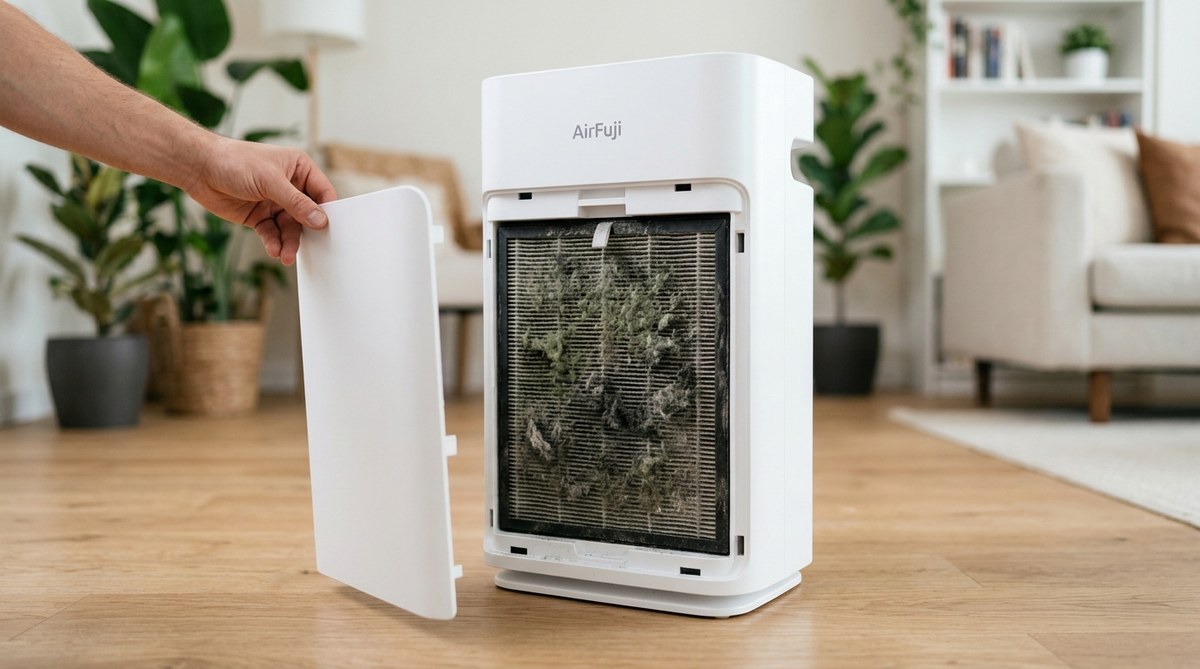
You bought an air purifier to breathe easier. You wanted cleaner air, fewer allergens, and peace of mind. But lately, something feels off. Maybe you notice a musty smell when the unit runs. Or you see dark specks near the intake vent. Your air purifier, the device meant to protect your home, might be growing mold. And the culprit is almost always one specific filter mistake.
The leading air purifier mold mistake is leaving a wet or damp filter inside the unit for too long. When moisture gets trapped in the filter media, mold spores land, feed, and multiply. The fix is simple: dry your filter before reinstalling it, replace it on schedule, and keep indoor humidity below 50 percent. Stop the damp cycle, stop the mold.
Why Your Air Purifier Becomes a Mold Incubator
Most people assume an air purifier automatically makes the air healthier. That is true only if the machine stays clean. Think about what your purifier does all day. It pulls air through a filter, trapping dust, pet dander, pollen, and mold spores. Those trapped particles sit inside the filter media. If the filter stays dry, the spores stay dormant. But add moisture, and you give them a perfect home.
Mold needs three things to grow: a food source, the right temperature, and moisture. Your used filter is full of organic material, which is food. The inside of your home is usually warm enough. The only missing piece is water. Once moisture enters the equation, mold colonizes your filter within 48 to 72 hours. Then your air purifier starts blowing mold spores back into the room.
The One Mistake That Causes Mold Growth
The single most common air purifier mold mistake is putting a filter back into the unit while it is still wet.
Here is how it usually happens. You vacuum or rinse a washable pre-filter. You give it a few shakes and put it back. Or you live in a humid climate, and your HEPA filter has absorbed moisture from the air. You do not realize the filter is damp. You snap the cover shut and turn the machine on. Now you have created a dark, warm, wet chamber. Mold loves that environment.
Other variations of the same mistake include:
- Running the purifier in a bathroom during a hot shower without a dehumidifier
- Placing the unit near a humidifier or a leaky window
- Storing a spare filter in a damp basement or garage
- Skipping filter changes for months, allowing buildup to trap moisture
How to Check If Mold Is Already Growing
You do not need a lab test. Use your senses. Follow this numbered checklist to inspect your unit today.
- Smell test. Turn the purifier to its highest setting. Walk close to the air outlet. Take a deep breath. If you detect a musty, earthy, or sour odor, mold is likely inside.
- Visual check. Remove the front cover. Pull out the filter. Look at the surface under bright light. Mold often appears as green, black, white, or gray patches. Check the folds of a HEPA filter carefully.
- Touch test. Gently press the filter surface. If it feels damp or cool to the touch, moisture is present. A dry filter should feel like paper or cardboard.
- Back of the unit. Shine a flashlight into the fan blades and interior housing. Look for dust clumps or dark spots. Mold can grow on the plastic walls inside the machine.
- Compare dates. Check when you last replaced the filter. If it has been more than six months and you live in a humid area, you are overdue.
What to Do If You Find Mold
Do not panic. You can fix this. But you need to act fast to stop the spread.
| Situation | Action | Why It Works |
|---|---|---|
| Filter has visible mold | Throw it away immediately. Replace with a new one. | Mold spores are embedded deep in the media. Cleaning cannot remove them all. |
| Filter smells musty but no visible mold | Replace it anyway. | Odor means microbial growth has started. It will get worse. |
| Interior of the unit has mold spots | Wipe with a cloth dampened with diluted white vinegar or a mild bleach solution (1 part bleach to 10 parts water). Dry completely before reassembling. | Kills surface mold and prevents regrowth. |
| Pre-filter is washable and has mold | Wash with warm water and mild soap. Rinse thoroughly. Dry in direct sunlight for 4 hours. | Sunlight is a natural fungicide. Drying ensures no moisture remains. |
| Unit was stored with a wet filter | Discard the filter. Clean the interior. Let the empty unit run on high for 30 minutes to dry out the fan and vents. | Removes hidden moisture pockets. |
Practical Steps to Prevent Mold in Your Air Purifier
You do not have to choose between clean air and a moldy machine. Follow these bulleted tips to keep your purifier dry and safe.
- Control your home’s humidity. Keep indoor relative humidity between 30 and 50 percent. Use a hygrometer to monitor it. In humid months, run a dehumidifier in the same room as your purifier. Read our guide on top tips for choosing the best dehumidifier for your home to find the right match.
- Dry washable filters completely. After cleaning, let the pre-filter air dry for at least 24 hours. Place it in front of a fan or in a sunny window to speed the process. Never reinstall a damp filter.
- Replace filters on schedule. Do not push the replacement date. A clogged filter holds more moisture and restricts airflow, which creates condensation inside the unit. Check our stop wasting money filter replacement schedule for exact timing.
- Place the purifier away from moisture sources. Keep it at least three feet away from humidifiers, fish tanks, kitchen sinks, and bathroom doors. Do not put it directly on a carpet that might trap humidity.
- Run the purifier daily. Stagnant air inside a turned-off unit can allow moisture to settle. Running the machine keeps air moving and helps evaporate any minor dampness.
- Inspect the filter monthly. Make it a habit. Set a recurring reminder on your phone. A 30 second look can save you from a mold problem.
“The biggest mistake I see is people treating their air purifier like a set and forget appliance. Filters are living components of your air quality system. They capture living things like mold spores and bacteria. If you give those captured particles moisture, they will grow right where you trapped them. Treat your filter like a sponge, not a permanent solution.”
* Dr. Elena Marchese, Indoor Air Quality Specialist
Why Humidity Is the Hidden Enemy
You can change your filter every month, but if your home has high humidity, you are still at risk. Mold spores float in the air constantly. They land on every surface. When the air is dry, they cannot germinate. When humidity rises above 60 percent, the spores absorb moisture from the air and start growing.
This is why an air purifier alone is not enough in a damp home. You need to address the root cause. A dehumidifier works alongside your purifier to remove the moisture that mold needs. For a full breakdown of how to balance both devices, see our article on tired of dry air how to balance humidity levels when running your air purifier.
Common Myths About Air Purifiers and Mold
Let us clear up a few misunderstandings that lead to mold problems.
- Myth: A HEPA filter kills mold spores. HEPA filters trap spores, they do not kill them. The spores stay alive inside the filter. If the filter gets wet, they will grow.
- Myth: UV-C lights inside the purifier prevent mold. UV-C can kill some microbes, but it does not reach the deep folds of a HEPA filter. Mold can still grow on the filter surface.
- Myth: Ionizers stop mold. Ionizers charge particles to make them stick to surfaces. They do not remove moisture or kill mold. They can even make the problem worse by depositing spores on damp surfaces inside the unit.
- Myth: You can clean a HEPA filter with water. Water destroys the delicate fiber structure of a HEPA filter. It also leaves moisture behind. Never wash a HEPA filter. Replace it.
Build a Mold Resistant Routine for 2026
The best defense is a simple, repeatable routine. Here is a weekly and monthly plan to keep your air purifier mold free.
Every week:
– Check the pre-filter for visible dust and debris.
– Wipe down the exterior and air intake grille with a dry microfiber cloth.
– Verify your hygrometer reading. If humidity is above 55 percent, run the dehumidifier.
Every month:
– Remove and inspect the main filter. Look for discoloration, dampness, or odor.
– Vacuum the pre-filter if it is washable. Do not wash it unless the manufacturer says it is safe.
– Run the purifier on high for one hour with the windows closed to circulate and dry the internal components.
Every season:
– Replace the filter according to the manufacturer’s schedule. In humid climates, replace it one month earlier than recommended.
– Clean the fan blades and interior housing with a dry brush or vacuum attachment.
– Review your air purifier placement for maximum efficiency to ensure nothing is blocking airflow.
Your Air Purifier Should Protect You, Not Harm You
That musty smell is a warning. It is telling you that your air purifier has switched sides. Instead of cleaning your air, it is adding mold spores to every breath you take. The good news is you now know exactly why it happens and how to stop it.
The air purifier mold mistake is simple: letting moisture sit in the filter. The solution is just as simple: keep everything dry. Dry your filters. Dry your home. Replace on time. Check often.
Take ten minutes today to inspect your unit. If you find mold, replace the filter and clean the interior. Then set a recurring reminder to check again next month. Your lungs will thank you, and your home will smell fresh, not funky. You deserve air that actually helps you breathe easier.