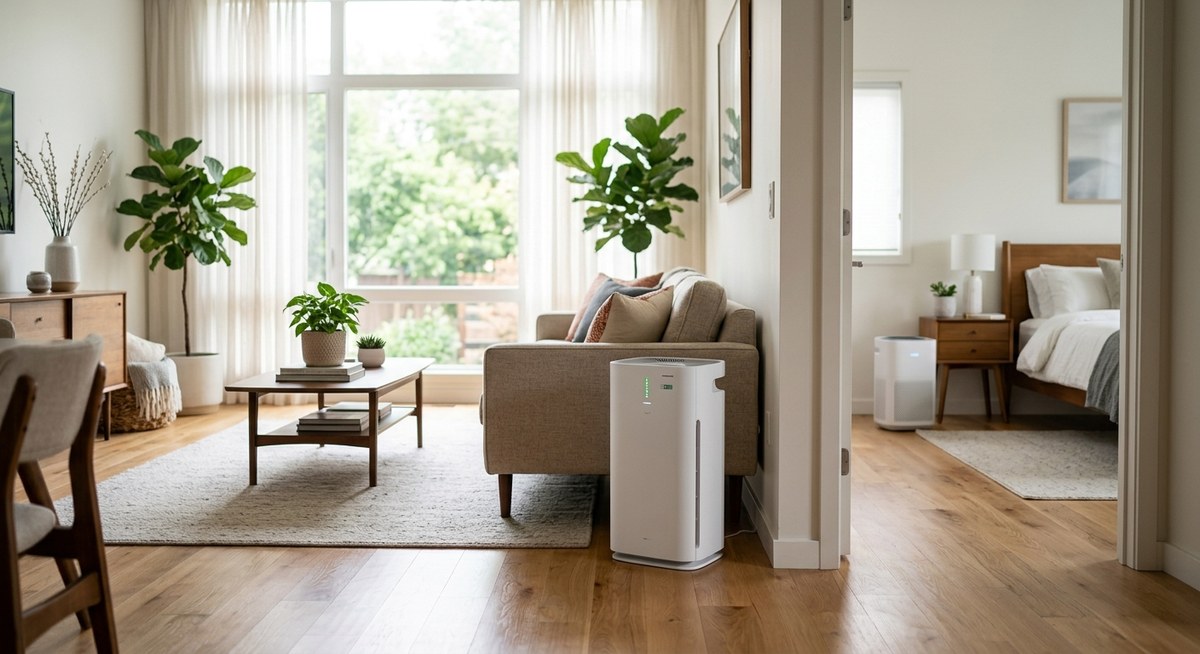
You bought a great air purifier. You set it up, turned it on, and waited for the magic to happen. But a few days later, your allergies still flare up, and the air doesn’t feel as fresh as you hoped. The problem might not be your machine. It could be where you put it. Air purifier placement can double or even triple the effectiveness of your unit. Getting it right means cleaner air, fewer symptoms, and better sleep. Getting it wrong means wasted energy and money.
Place your air purifier 3 to 5 feet off the floor, away from walls and furniture, in the room where you spend most of your time. The bedroom is your top priority. Keep it near the source of pollutants if possible, and let it run 24/7. Avoid corners, curtains, and electronics that block airflow. Test different spots and watch your allergy symptoms change.
Why Placement Matters More Than You Think
Think of your air purifier as a vacuum for the air. It pulls in dirty air, traps particles, and pushes out clean air. But if you block the intake or place it in a dead zone, that cycle breaks.
Clean Air Delivery Rate (CADR) tells you how fast a purifier cleans a space. But the CADR rating only matters if the unit can actually circulate air. A machine with a high CADR sitting behind a sofa will perform worse than a smaller unit placed in an open area.
Indoor air moves in patterns. Dust kicks up from floors, pet dander floats near the ground, and pollen drifts through open windows. Your purifier needs to intercept those particles before they settle. The right placement turns a decent purifier into a powerful one.
For deeper insights on choosing the right model, check out our guide on how to choose an air purifier for asthma and allergy relief.
The Golden Rules of Air Purifier Placement
These principles apply to every room. Follow them, and you will see a noticeable difference in air quality.
-
Elevate the unit. Place your purifier 3 to 5 feet off the ground. This puts the intake at breathing level, where most allergens and particles float. Many units come with short legs or a stand. Use them. If not, set it on a sturdy end table or low shelf.
-
Keep it away from walls. Your purifier needs space to pull air from all sides. Leave at least 6 inches of clearance on every side. 12 inches is even better. Tucking it into a corner just recirculates the same dead air.
-
Avoid obstructions. Curtains, furniture, and electronics block airflow. Do not place it behind a bed or under a desk. Keep the area in front of the intake and outlet completely clear.
-
Position it near pollution sources. If someone smokes, cooks often, or you have a cat that loves the couch, set the purifier close to that spot. But not too close – keep 3 feet away to avoid overwhelming the filter.
-
Run it continuously. Air purifiers work best when they run all day. Turning it on only when you feel bad is like waiting for a headache to take pain relievers. Let it cycle the whole room every hour.
To maximize your unit’s performance over time, read our article on how to maximize air purifier effectiveness for a healthier home in 2026.
Room by Room Placement Guide
Not every room has the same needs. Here is how to adapt the golden rules to each space.
| Room | Best Location | Common Mistake | Why It Works |
|---|---|---|---|
| Bedroom | 3 feet from the bed, on a nightstand or dresser, facing the breathing zone | Placing it on the floor near the closet | Filters the air you breathe all night; elevated avoids dust kicked up from walking |
| Living Room | Central wall, at least 2 feet from TV or entertainment unit | Putting it behind a sofa or in a corner | Maximizes circulation in the largest open space; keeps electronics from blocking intake |
| Kitchen | Countertop or shelf, 4+ feet from the stove | Setting it right next to the range hood | Captures cooking fumes and smoke without overheating the purifier or getting greasy |
| Home Office | Desk height, 2 feet from your workstation | Tucking it under the desk in a cubicle | Filters dust and printer particles at your breathing level |
| Basement | Elevated on a shelf, away from damp walls | Placing it directly on concrete floor | Avoids moisture intake; higher position grabs dust and mold spores from air |
| Nursery | Dresser top or high shelf, 6+ feet from crib | Putting it on the floor next to the changing table | Keeps it out of reach, reduces noise level, and cleans the air above the crib |
Common Placement Mistakes to Avoid
Even smart homeowners make these errors. Skip them to get the most from your purifier.
- Blocking the intake with furniture. Your purifier needs open air space. A chair or bookshelf right in front cuts airflow by half.
- Putting it in the same room as a ceiling fan running on high. The fan can blow dirty air away from the purifier and reduce its reach. Coordinate fan and purifier placement.
- Using it only during allergy season. Dust, VOCs, and bacteria build up year round. Continuous use keeps the baseline clean.
- Forgetting to close windows and doors. An open window pulls in outdoor pollution and makes your purifier work harder. Seal the room for best results.
- Ignoring filter maintenance. A clogged filter restricts airflow and makes your unit less effective no matter where it sits.
If you suspect your purifier is underperforming, check out 5 surprising mistakes that ruin your air purifier’s performance (and how to fix them).
How to Test Your Placement
You do not need expensive equipment to know if your purifier is in the right spot. Try this simple process.
-
Set your purifier to its highest fan speed. Walk around the room and feel for airflow. Do you feel the air moving from the outlet? Good. If not, move it closer to the center.
-
Tape a thin tissue to the intake grille. If it flutters, the air is being pulled in. If it stays still, the intake is blocked.
-
Run the purifier for 48 hours in one spot. Then move it to a new spot and run it another 48 hours. Notice when you wake up with fewer stuffy noses or less sneezing.
-
Use a visual check. After a week, inspect the pre filter. If one side is darker than the other, the airflow is uneven. Reposition the unit.
-
Check your allergy symptoms or dust accumulation. If dust settles on the same surfaces after the purifier runs, try a new location.
For a deeper look at sizing and matching your purifier to your space, see how to calculate the right air purifier size for every room in your home.
When to Move Your Purifier Around
Some people ask, “Should I move my purifier from the bedroom to the living room during the day?” The answer depends on your layout and machine size.
“A single powerful purifier can clean a whole open floor plan if placed centrally. But for closed off rooms, you are better off with one unit per room. Moving it every day leads to inconsistent coverage and more wear on the unit.” – Dr. Lisa Chen, indoor air quality specialist
If you have one purifier and multiple closed rooms, here is a practical schedule:
- Nighttime: Bedroom. Sleep with clean air.
- Daytime: Living room or home office, whichever you use most.
- After cooking: Kitchen for an hour after meals to clear smoke and smells.
- Basement: Only when you spend time there or after heavy rain.
Moving it is fine, but remember to let it run for at least 30 minutes in each spot before expecting results. The air needs time to cycle.
Breathe Easier Starting Today
Getting the best from your air purifier does not require a degree in HVAC. It just takes a few small adjustments. Lift it off the floor. Give it room to breathe. Put it where you actually are. And let it run.
If you are still in the market for a new unit, browse our top air purifiers for allergies and asthma relief in 2026 to find one that fits your home and budget.
Start today. Move your purifier to a better spot tonight. You might wake up tomorrow feeling the difference. Cleaner air is not a luxury – it is a simple change that makes your whole day better.