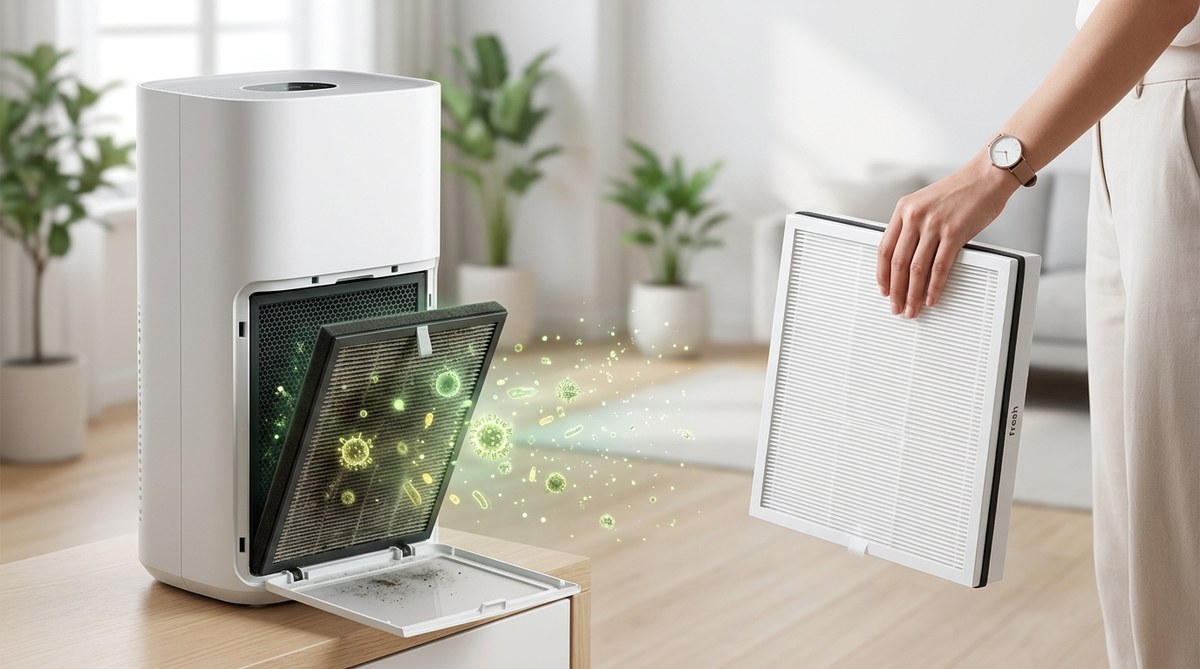
You bought an air purifier to breathe easier. You wanted cleaner air, fewer allergens, and a healthier home. But what if that same machine is quietly working against you? It sounds backward, but an air purifier spreading bacteria is a real problem. When moisture, dust, and warmth meet inside your unit, they create a perfect breeding ground for microbes. Instead of cleaning your air, your purifier can become a source of contamination. The good news? You can stop it with a few simple habits.
An air purifier spreading bacteria usually happens because of neglected filters, trapped moisture, or lack of routine cleaning. The fix involves regular filter swaps, drying internal components, and using UV-C or high-efficiency HEPA technology. By following a simple maintenance schedule, you can keep your purifier working as a true clean air machine, not a hidden source of germs.
How Bacteria Finds a Home Inside Your Air Purifier
Your air purifier pulls in dust, pet dander, pollen, and floating bacteria from the room. That is its job. The problem starts when those particles get stuck inside the machine and never leave. If your unit has a pre-filter or a HEPA filter that stays damp, bacteria can multiply there. Mold and mildew love dark, humid spaces. Your air purifier, especially if placed in a bathroom or near a kitchen, can become that space.
Some units use washable filters. If you do not dry them completely before putting them back, you are inviting bacterial growth. The same goes for the internal fan and the plastic housing. When moisture lingers, bacteria cling to the surfaces. Then, every time the fan spins, it blows those microbes back into your living room or bedroom.
The Science Behind an Air Purifier Spreading Bacteria
Bacteria are tiny. They can pass through some filters if the filter is damaged or if the seal around it is loose. A HEPA filter is designed to trap particles as small as 0.3 microns. But if the filter is wet, the fibers can degrade. That creates gaps. Bacteria slip through those gaps.
Also, consider the drain of moisture. If you live in a humid state like Florida or Texas, your indoor humidity might sit above 60 percent. That level of moisture in the air can condense inside your purifier. Once water collects, bacteria like Staphylococcus or Pseudomonas can colonize the filter. When the unit runs, it aerosolizes those bacteria. You breathe them in.
“A neglected air purifier can actually increase the bacterial load in a room,” says Dr. Laura Simmons, an indoor air quality researcher. “The filter becomes a reservoir. Without proper drying and replacement, the machine is no longer a solution. It becomes part of the problem.”
Common Mistakes That Lead to Bacterial Spread
Many people assume that running the machine constantly keeps it clean. That is not true. Here are the most common mistakes that cause an air purifier spreading bacteria:
- Skipping filter changes. A clogged filter traps moisture. Moisture feeds bacteria.
- Using a wet filter. Washing a reusable filter and reinstalling it while still damp is a direct invitation for mold.
- Ignoring the pre-filter. The pre-filter catches large particles. If it is dirty, airflow drops, and moisture builds up.
- Placing the unit in a damp room. Basements, bathrooms, and laundry rooms are high-risk zones.
- Forgetting to clean the fan blades. Dust on the fan can host bacteria and then blow them into the air.
How to Stop Your Air Purifier from Spreading Bacteria
You do not need to throw away your machine. You just need a better routine. Follow these steps to keep your air purifier working for you, not against you.
- Check your filter every month. If it looks gray or feels damp, replace it. Do not wait for the indicator light.
- Dry washable filters completely. After washing, let them sit in sunlight for at least 24 hours. Sunlight kills bacteria naturally.
- Wipe down the interior. Use a dry microfiber cloth to clean the fan blades and the inside housing. Do this every three months.
- Use a dehumidifier in humid rooms. Lowering the humidity below 50 percent makes it harder for bacteria to grow. Check out our guide on understanding dehumidifier settings to optimize indoor comfort for more help.
- Run the unit on a timer. Running it 24/7 is fine, but if you live in a humid climate, give the machine a break so internal moisture can evaporate.
What to Look for in a Bacteria-Resistant Air Purifier
If you are shopping for a new unit, or upgrading your current one, look for these features. They reduce the risk of an air purifier spreading bacteria:
- True HEPA filter with antimicrobial coating. Some filters have a treatment that stops bacteria from growing on the fibers.
- UV-C light. Ultraviolet light kills bacteria and viruses inside the machine. It is an extra layer of protection.
- Sealed system. A tight seal between the filter and the fan prevents unfiltered air from bypassing the filter.
- Auto-dry mode. Some newer models run the fan for a few minutes after the unit shuts off to dry the filter.
| Feature | How It Helps | Common Mistake to Avoid |
|---|---|---|
| True HEPA filter | Traps 99.97% of particles, including bacteria | Using a knockoff filter that does not fit properly |
| UV-C light | Kills microbes on contact | Thinking UV-C replaces the need for filter changes |
| Sealed system | Prevents air from leaking around the filter | Ignoring cracks in the plastic housing |
| Auto-dry mode | Dries the filter after use | Placing the unit in a spot with no airflow |
Simple Weekly Habits to Keep Bacteria Away
You do not need to spend hours cleaning. A few minutes each week can make a huge difference. Add these to your routine:
- Vacuum around the intake vents. Dust buildup there gets pulled inside.
- Check for any unusual smells. A musty odor is a warning sign of bacterial growth.
- Feel the air coming out. If it feels damp, your filter may be wet.
- Keep the area around the purifier clear. Do not block the airflow with furniture or curtains.
For more tips on keeping your whole home healthy, read our article on improve indoor air quality with simple tips for a healthier home.
When to Replace Your Air Purifier
Sometimes a unit is too old or too damaged to save. If you notice any of these signs, consider buying a new one:
- The filter no longer fits snugly.
- You see visible mold inside the machine.
- The fan makes a rattling noise (debris may be stuck inside).
- The unit is more than five years old and lacks modern features like UV-C.
If you are in the market for a new model, take a look at our recommendations for choosing the best air purifier for your home expert recommendations.
The Role of Humidity in Bacterial Growth
Humidity is the hidden factor. Even if you clean your purifier perfectly, high indoor humidity can still cause bacterial growth inside the machine. That is because the filter acts like a sponge. It absorbs moisture from the air. If your home stays above 60 percent humidity, you are fighting an uphill battle.
A dehumidifier can help. Pairing an air purifier with a dehumidifier is a powerful combo. The dehumidifier pulls moisture out of the air, and the purifier catches the particles. Together, they keep both humidity and bacteria low. Learn more about top tips for choosing the best dehumidifier for your home.
How to Clean Your Air Purifier Step by Step
Cleaning your unit is not complicated. Here is a simple process you can follow every three months:
- Unplug the unit.
- Remove the front cover and the filter.
- Vacuum the inside of the machine, including the fan blades.
- Wipe down the plastic housing with a dry cloth. Do not use water or cleaning sprays inside the unit.
- If the filter is washable, rinse it with cold water. Let it dry completely for 24 hours.
- If the filter is disposable, replace it with a new one.
- Reassemble the unit and plug it back in.
This routine takes about 15 minutes. It stops an air purifier spreading bacteria before it starts.
Why Your Current Filter Might Be the Problem
Not all filters are created equal. Some low-cost filters do not have the same density as a true HEPA filter. They let small particles pass through. Others are made with materials that break down quickly in humid conditions. If you are using a generic replacement filter, check the packaging. It should say “True HEPA” or “H13 HEPA.” If it does not, upgrade.
Also, pay attention to the filter’s lifespan. Most HEPA filters last six to twelve months. If you live in a dusty or humid area, replace them more often. For a full breakdown of filter types, read what do air purifiers actually remove a breakdown of pollutants and filters.
A Fresh Start for Your Indoor Air
Your air purifier is a tool, not a magic box. It needs care. When you treat it right, it rewards you with clean, fresh air. When you ignore it, it can turn into a source of bacteria. The difference is a few minutes of maintenance each month.
Start today. Check your filter. Wipe down the vents. If it has been a while since you cleaned the inside, do it now. Your lungs will thank you. And if you are ready to upgrade, explore our guide on how to maximize air purifier effectiveness for a healthier home in 2026 to get the most out of your next purchase.
Keep Your Air Clean, Not Contaminated
An air purifier spreading bacteria is a problem you can solve. It does not require expensive equipment or a complete home renovation. It just requires awareness and a small shift in your routine. Check your filters. Dry your components. Manage your humidity. That is the whole formula.
Your home should be your sanctuary. Make sure the air you breathe supports your health, not works against it. With these steps, you can keep your air purifier doing what it was meant to do: delivering clean, fresh air every single day.