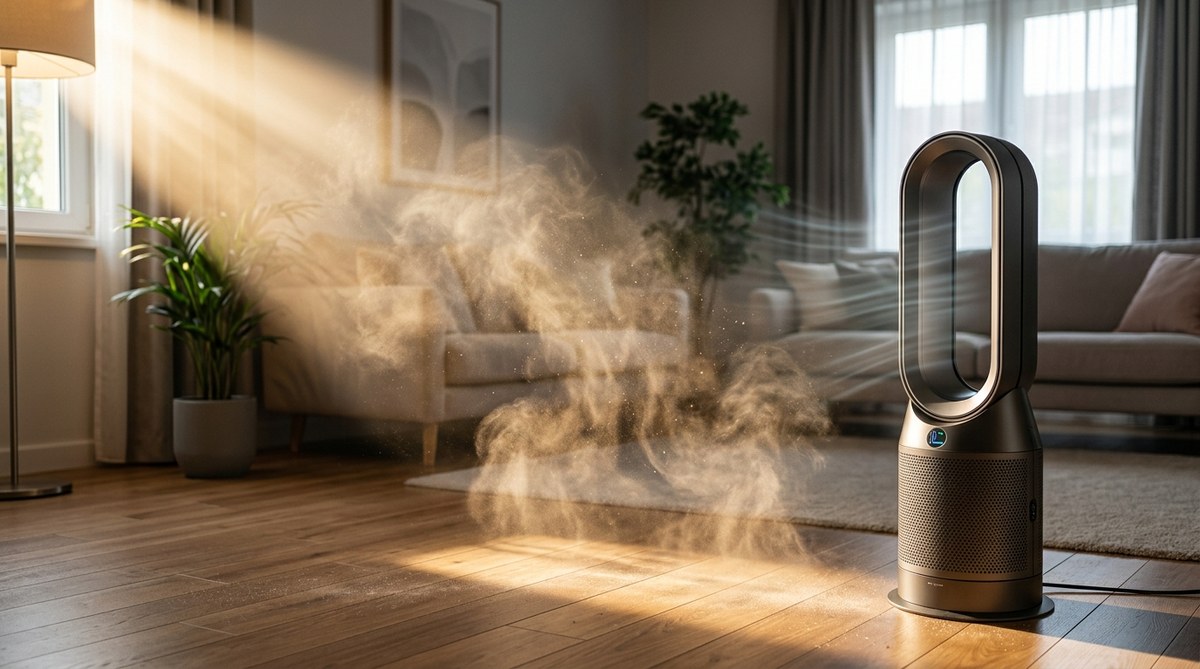
Your air purifier sits in the corner, humming away, catching pollen and pet dander. You feel good about it. But here is the uncomfortable truth: that same machine might be kicking dust back into the room. It is a phenomenon called particle resuspension, and it can turn your clean air investment into a subtle source of indoor pollution. The good news is that you can stop it without buying a new unit.
Air purifiers can create hidden dust clouds by resuspending settled particles or blowing unfiltered air across dirty surfaces. This worsens allergy symptoms and reduces air quality. You can fix this by sealing air gaps, using a pre-filter, vacuuming near the intake, and choosing a unit with a high CADR for your room size. A few simple changes make all the difference.
How Your Air Purifier Creates a Dust Problem
You might notice dust collecting on your nightstand faster after running the purifier. That is not your imagination. Most air purifiers pull air in from one side and blow it out from another. If the airflow is strong enough, it stirs up particles that have settled on floors, shelves, and furniture. These particles become airborne again, and you breathe them in.
The issue is worse if your unit has air leaks. Cheap plastic casings or poorly fitting filters allow unfiltered air to bypass the HEPA media. That air still carries dust, but it never gets trapped. You get the noise without the benefit.
Another culprit is the pre-filter. Many people forget to clean it. When it clogs, the fan has to work harder. That extra force pushes air through gaps and stirs up more dust around the machine.
The Science Behind Resuspension
Particles settle on surfaces over time. When a fan blows air across a table, the airflow lifts those particles back into the breathing zone. A study from the University of Texas found that vacuuming and fan operation can resuspend up to 30 percent of settled dust within minutes. Your air purifier is essentially a fan with a filter. If the filter is not capturing everything, the fan part still works.
This is especially problematic for people with allergies. Pollen, mold spores, and dust mites are light. They float easily. Once resuspended, they stay in the air for hours. You might think the purifier is helping, but it is actually cycling the same irritants around the room.
“A dirty pre-filter is the number one cause of dust resuspension in homes. Clean it every two weeks if you have pets or live on a busy street.” — Indoor Air Quality Specialist, Dr. Maria Chen
Three Steps to Stop the Dust Cloud
You do not need a new machine. You just need to change how you use the one you have. Follow these steps to break the cycle.
- Seal the unit. Check the filter door and any seams. Use painter’s tape on the outside edges if you see light coming through. This prevents bypass air from escaping.
- Vacuum the intake. Every week, use a soft brush attachment on your vacuum to clean the inlet grille. This removes the layer of dust that your purifier would otherwise blow back into the room.
- Upgrade your filter schedule. Replace the HEPA filter on time, but clean the pre-filter twice as often. A clean pre-filter catches large particles before they reach the main filter, and it reduces strain on the fan.
These three actions alone can cut resuspended dust by more than half.
Common Mistakes That Make Things Worse
Many well-meaning owners accidentally worsen their air purifier dust problem. Here is a breakdown of what not to do.
| Mistake | Why It Hurts | Better Approach |
|---|---|---|
| Placing the unit on the floor | Floor level has the most dust. The intake pulls it in, but the outflow stirs up more. | Place the purifier on a table or stand at least 18 inches off the ground. |
| Running it on high speed constantly | Higher fan speeds increase airflow turbulence and resuspension. | Use medium or auto mode unless you need to clear smoke or strong odors. |
| Ignoring the pre-filter | A clogged pre-filter forces air through gaps in the casing. | Clean the pre-filter every two weeks with a vacuum or rinse it if washable. |
| Putting it in a corner | Corners have poor airflow, so the machine recirculates the same dusty air. | Leave at least 12 inches of clearance on all sides. |
How to Choose a Purifier That Won’t Create Dust
If you are shopping for a new unit in 2026, look for design features that minimize resuspension. A top priority is a fully sealed system. Some brands use gaskets around the filter to ensure all air passes through the media. This is often called a “true HEPA seal.”
Also consider the CADR (clean air delivery rate). A unit with a CADR that matches your room size will run more efficiently at lower fan speeds. Lower speeds mean less turbulence. For a 300 square foot bedroom, look for a CADR of at least 200 for smoke and pollen.
Another feature to check is the intake placement. Units that pull air from the front or sides tend to stir up less floor dust than those with bottom intakes. If you have carpet, a bottom intake is almost guaranteed to resuspend fibers and dust.
For more help choosing the right model, read our guide on how to select the perfect air purifier for your family’s health and safety.
What to Do If You Already Own a Problematic Unit
You do not have to toss your current purifier. Try these adjustments first.
- Move it away from high traffic areas. Every time someone walks by, they stir up dust. If the purifier is nearby, it will pull that dust in and then blow some back out.
- Use a separate air quality monitor. A simple PM2.5 sensor will tell you if particle levels rise when the purifier runs. If they do, you have a resuspension issue.
- Add a standalone fan to improve room circulation. This helps the purifier work more efficiently and reduces localized dust clouds.
When to Consider a Different Type of Filter
Not all filters behave the same. HEPA is great for trapping particles, but it does nothing for gases. More importantly, some HEPA filters have a lower pressure drop, which means less strain on the fan. Less strain equals less airflow turbulence.
Electrostatic precipitators and ionizers can actually worsen the dust problem. They charge particles, which then stick to surfaces instead of being captured. Over time, those particles get knocked loose and become airborne again. Avoid these if you are concerned about resuspension.
If you want to understand the differences between filter types, check out our comparison of HEPA vs. UV-C air purifiers.
A Simple Weekly Routine
To keep your air purifier from becoming a dust machine, build this routine into your weekly cleaning.
- Vacuum the intake grille and the area around the unit.
- Wipe down the exterior with a damp cloth. Static electricity on the plastic can attract dust.
- Check the pre-filter. If it looks gray, clean it.
- Move the unit slightly to ensure nothing is blocking the outflow.
This takes five minutes. It will save you from breathing stirred up particles all week.
The Role of Humidity
Dry air makes dust particles lighter and more likely to stay airborne. If your home is below 40 percent humidity, consider using a humidifier. Slightly moist air causes particles to cling to surfaces rather than float. Just be careful not to exceed 60 percent, or you risk mold growth.
A balanced humidity level works with your purifier to reduce the overall dust load. It is a simple, low cost way to improve performance.
Final Thoughts on the Air Purifier Dust Problem
Your air purifier should be a helper, not a hidden source of indoor pollution. The dust cloud it creates is real, but it is also preventable. By sealing the unit, cleaning the pre-filter, and placing it wisely, you can enjoy the benefits of cleaner air without the side effect of resuspended dust.
Take a few minutes this week to inspect your setup. Check for gaps. Clean the intake. Move it off the floor. Your lungs will thank you, and so will your allergy symptoms.
For more ways to get the most out of your machine, see our tips on how to maximize air purifier effectiveness for a healthier home in 2026.