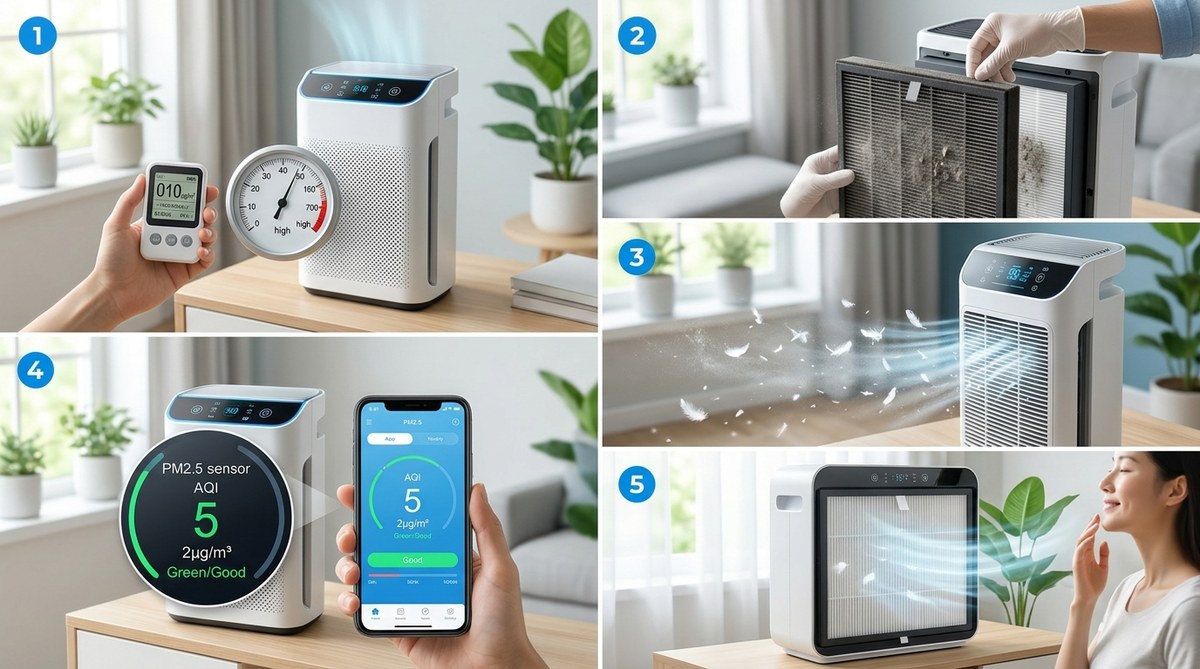
You just plugged in your new air purifier, set it to high, and now you wait. You watch the sleek tower hum. You expect to feel cleaner air. But after a few days, you start to wonder. Is this thing actually doing anything? It is a fair question. Air purifiers work silently. You cannot see them trap dust, pollen, or smoke. That makes it hard to trust them. The good news is you do not need a lab coat or expensive gadgets to find out. You can test your air purifier right now with items you already own.
You can verify your air purifier’s performance using five simple home tests. Check airflow with a tissue, inspect the filter for trapped particles, use a white sock to catch dust, run an incense smoke test, and track your own allergy symptoms. These DIY methods give you real proof your machine is working without expensive equipment.
Why Trusting Your Air Purifier Matters
Allergy sufferers and health focused homeowners buy air purifiers for relief. You want fewer sneezes, less dust, and better sleep. When a machine costs over a hundred dollars, you need to know it earns its spot on your floor. Manufacturers list CADR ratings and HEPA claims, but those numbers mean little if your unit sits in the wrong spot or has a clogged pre-filter. Testing your purifier gives you peace of mind. It also helps you catch problems early, like a failing fan or a filter that needs replacing.
Most air purifier issues come down to three things: placement, filter condition, and room size. If you suspect your unit is underperforming, start with those three checks before buying a new machine. It saves money and frustration.
The Tissue Test for Airflow
This is the easiest method. It takes ten seconds.
- Turn your air purifier to the highest fan speed.
- Take a single ply tissue and hold it a few inches from the air outlet grill.
- Let go.
If the tissue stays pressed against the grill or gets sucked toward it, your fan is moving air properly. If the tissue falls or flutters weakly, you have a problem. Weak airflow usually means a dirty filter, a blocked intake, or a failing motor. Check the pre-filter first. Many people forget to vacuum it every month. A clogged pre-filter chokes the machine.
You can also try this test near the intake vents. Place your hand an inch away from the side or back panel where air enters. You should feel a gentle pull. No suction means something is blocking the path. For more details on keeping your unit running strong, read our guide on how to maximize air purifier effectiveness for a healthier home in 2026.
The White Sock Trick
This test gives you visual proof of particle removal.
- Take a clean white sock. A thin athletic sock works best.
- Slide it over the air outlet of your purifier. Secure it with a rubber band if needed.
- Run the machine on medium speed for 48 hours.
- Remove the sock and inspect it.
A sock that looks gray, brown, or black means your purifier is capturing airborne junk. If the sock stays bright white, either your air is very clean or your purifier is not pulling in enough air. This method works especially well in bedrooms where dust and pet dander accumulate. It also helps you see if your unit struggles with larger particles like hair and lint.
The Incense Smoke Challenge
This test measures how fast your purifier clears visible particles. It mimics the way labs test CADR using smoke.
- Light a stick of incense in the same room as your purifier. Let it burn for two minutes to fill the space with smoke.
- Blow out the incense and place the purifier on high speed.
- Stand near the unit and watch the smoke haze.
A working purifier with good CADR should clear the visible smoke within 15 to 30 minutes in a standard sized bedroom. If the smoke lingers for over an hour, your purifier is either too small for the room or its filters are exhausted. You can also use this test to compare performance at different fan speeds. Run the test once on low and once on high to see the difference.
Keep in mind that incense smoke contains fine particles. This test is safe for occasional use, but do not make it a daily habit. If you want a more scientific approach, consider buying a low cost particle counter. They cost about forty dollars and give you real time PM2.5 readings. For a full breakdown of what your purifier can and cannot remove, check out our article on what do air purifiers actually remove.
Check Your Filter the Right Way
You can tell a lot by looking at your filter. But do not just pull it out and glance at it. Do this instead:
| What to check | What it means |
|---|---|
| Color of the HEPA media | White or light gray is fine. Dark gray or brown means it is saturated. |
| Visible debris on the surface | Pet hair, dust bunnies, or pollen clumps indicate the pre-filter failed. |
| Smell from the filter | A musty or sour odor means trapped moisture and mold growth. |
| Weight of the filter | A heavy filter holds more trapped particles. Compare to a new one. |
If your filter looks dirty but the purifier is only three months old, you might have an unusually dusty home or a leaky window. If the filter looks clean but the purifier is a year old, it might not be pulling enough air. Replace filters on schedule. Most brands recommend every six to twelve months. For specific timelines, see our stop wasting money filter replacement schedule.
Track Your Symptoms for Real World Proof
Your body is a sensitive air quality monitor. If you have seasonal allergies or asthma, pay attention to how you feel.
- Do you wake up with less congestion after running the purifier all night?
- Do your eyes stop itching within an hour of turning it on?
- Do you sneeze less when you sit near the unit?
Keep a simple journal for one week. Note your symptoms each morning and evening. Compare days when the purifier runs versus days when you leave it off. This is not a lab test, but it is the most relevant data for your health. If you notice no difference after two weeks, something is off. It could be placement. Move the unit closer to your bed or desk. It could also be that your room is larger than the purifier can handle. Learn how to match your machine to your space in our guide on how to calculate the right air purifier size for every room.
Common Mistakes That Skew Your Test Results
Testing your purifier is simple, but you can accidentally get misleading results. Avoid these errors.
- Testing in a room with open windows. Outdoor air dilutes the test. Close windows and doors for accurate readings.
- Using a dirty sock that already has dust on it. Start with a clean white sock.
- Placing the purifier in a corner. Units need at least 12 inches of clearance on all sides.
- Running the test for only five minutes. Give the machine time to cycle the room air. Most rooms need 15 to 30 minutes.
- Forgetting to clean the pre-filter before testing. A clogged pre-filter ruins airflow no matter how new the HEPA is.
For a deeper look at placement problems, read our article on the best air purifier placement for maximum efficiency.
When to Consider Upgrading
Sometimes your purifier passes all the tests but still leaves you wanting better air. That might mean you outgrew the unit. If you moved to a larger home, added pets, or started working from home, your air quality needs may have changed. Modern units in 2026 offer faster CADR, quieter operation, and smarter sensors. If your current machine is more than five years old, a newer model might clean your air in half the time. Check out our recommendations for top air purifiers for allergies and asthma relief in 2026 to see what fits your home.
A Simple Maintenance Checklist
Keep your purifier working at its best with this monthly routine.
- Vacuum the pre-filter every two weeks.
- Wipe down the exterior and intake grills with a damp cloth.
- Check the HEPA filter color every 90 days.
- Run the tissue test after each filter change.
- Replace filters on the manufacturer’s schedule, or sooner if you see dark discoloration.
These steps take less than ten minutes a month. They prevent the most common performance drops. For more maintenance tips, visit our how to extend the life of your air purifier filters and save money guide.
Putting It All Together for Cleaner Air
You do not need to be an engineer to know if your air purifier is working. A tissue, a white sock, a stick of incense, and your own senses give you all the proof you need. Run these tests today. If your machine passes, you can breathe easier knowing it earns its place. If it fails, you now know exactly what to fix. Replace the filter, move it out of the corner, or upgrade to a model that fits your room. Your health is worth the effort.
Start with the tissue test right now. It takes ten seconds and tells you more than any spec sheet ever could. Then move through the other checks over the next few days. By the end of the week, you will know for sure. No guessing. No doubt. Just cleaner air.