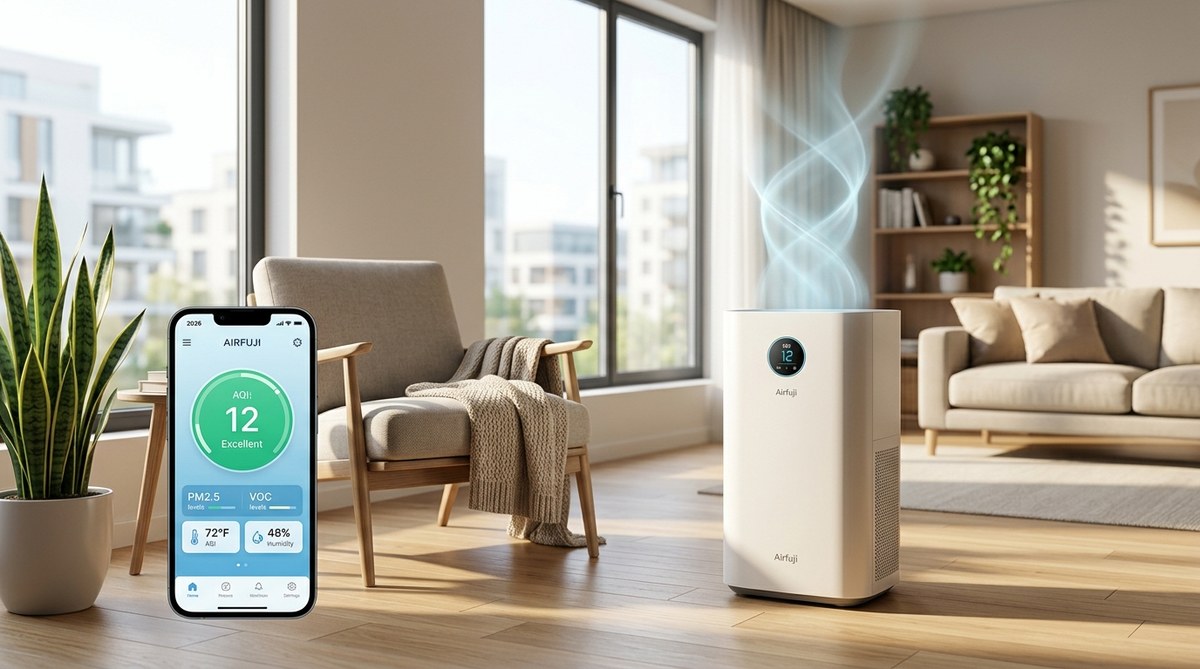
You walk into your living room, sneeze, and check the air quality on your phone. It reads “unhealthy” again. Your allergies are flaring, your asthma is acting up, and you are tired of guessing whether the air filter is doing its job. A smart air purifier promises to fix that, but the price tag is a lot higher than a standard model. Is it really worth the extra money in 2026? For health conscious folks who want real control over their indoor air, the answer is more clear now than ever.
A smart air purifier is worth the investment in 2026 for anyone with allergies or asthma who wants real time air quality data, automated scheduling, and remote control. While the upfront cost is higher, the long term savings from better filter management, energy efficiency, and health improvements often outweigh the premium. Focus on sensors, connectivity, and filter type.
What Makes a Smart Air Purifier Smart in 2026
It is not just about connecting to Wi Fi. A true smart air purifier in 2026 uses onboard sensors to measure PM2.5, VOCs, humidity, and temperature. It then adjusts its fan speed automatically. You get push alerts when the filter needs changing, and you can schedule it to run only when you are home. Many models also integrate with Amazon Alexa, Google Home, or Apple HomeKit, letting you say “turn on the purifier in the bedroom” without lifting a finger.
The biggest leap in 2026 is real time air quality mapping. Some high end units now link multiple purifiers across your home to give you a whole house picture. That is a game changer if you suffer from seasonal allergies or live in a city with wildfire smoke seasons.
But is that extra tech worth your dollar? Let’s look at the numbers.
The Real Cost: Is the Premium Justified?
A standard air purifier with HEPA filtration can cost anywhere from $80 to $250. A smart model with similar filtration often starts at $200 and goes up to $700 or more. That is a steep climb. However, the total cost of ownership tells a different story.
| Factor | Standard Purifier | Smart Purifier |
|---|---|---|
| Upfront price | $100 to $250 | $250 to $700 |
| Filter replacement frequency | Every 6 to 12 months (guesswork) | Optimized based on usage and sensor data (often 8 to 15 months) |
| Energy use | Runs on high all day because you forget to turn it down | Auto mode adjusts fan speed, saving up to 40% on electricity |
| Health tracking | None | Real time data helps you avoid high pollution periods indoors |
If you replace filters too early because you don’t know when they are full, you waste money. If you run the purifier on high 24/7 because you worry about air quality, you waste electricity. Smart models eliminate both inefficiencies.
Over three years, the smart option often costs the same or even less than a dumb one when you factor in filter and energy savings. And that does not include the potential health benefits: fewer missed work days due to asthma attacks, better sleep, and less medication.
For a deeper breakdown of how to pick the right model without overspending, check out our guide on how to choose an air purifier for asthma and allergy relief.
Key Health Benefits for Allergy and Asthma Sufferers
Your immune system does not care about Wi Fi. It cares about particle count. So why does the smart part matter for your health?
Real time alerts keep you safe. Imagine you are in the basement and a wildfire plume drifts into your neighborhood. A smart purifier can detect a rise in PM2.5 and ramp up filtration before you even smell smoke. A standard purifier stays on whatever setting you left it on.
Automated sleep modes improve rest. Many smart models use a light sensor to know when the room is dark and automatically switch to a whisper quiet fan speed. That means you get cleaner air without the hum keeping you awake. For people with asthma, lower night time particle levels can reduce the risk of nocturnal attacks.
Data helps you identify triggers. After a week of monitoring, you might see that your indoor air quality plunges every time you cook without the exhaust fan on. That insight alone can change your habits and reduce your allergen load.
If you want to see how to combine smart purifier data with other home improvements, read our article on improve indoor air quality with the best air purifiers for your home.
Smart Features That Actually Matter
Not all smart features are created equal. Some are gimmicks. Here is a table that separates useful from fluff.
| Feature | What It Does | Worth It? |
|---|---|---|
| Real time PM2.5 and VOC display | Shows current particle and gas levels. | Yes, especially for asthma triggers. |
| Auto mode with laser sensor | Adjusts fan based on actual air quality. | Yes, saves energy and improves comfort. |
| Voice control (Alexa, Google Home) | Lets you turn on/off hands free. | Nice convenience, not essential. |
| Filter life indicator with usage tracking | Tells you exactly when to replace. | Yes, saves money and ensures peak performance. |
| Multi unit coordination | Links several purifiers in different rooms. | Worth it for large homes or open floor plans. |
| App based scheduling | Sets run times based on your daily routine. | Yes, prevents wasteful 24/7 operation. |
| Air quality graphs and history | Shows trends over days or weeks. | Helpful for identifying patterns. |
Focus on models with a laser particle sensor (not just an infrared one). Laser sensors are much more accurate at detecting small particles that trigger your allergies.
Practical Setup Guide: 4 Steps to Get the Most from Your Smart Purifier
Buying a smart purifier is only half the battle. Setting it up correctly makes the real difference. Follow these steps.
-
Place it in the right spot. Put the purifier in the room where you spend the most time, usually the bedroom or home office. Keep it at least 12 inches away from walls and furniture to allow good airflow. Do not tuck it behind curtains.
-
Connect it to your home Wi Fi and calibrate the sensor. Most smart purifiers need an initial calibration period of 48 hours. During that time, do not change the fan speed manually. Let the sensor learn your home’s baseline air quality.
-
Set up an automation routine. Use your phone app to create a schedule. For example: run on low during the workday, ramp up to medium in the evening when you cook, and switch to quiet mode at bedtime. If you have a smart speaker, add a voice command like “turn on air purifier” for convenience.
-
Enable push notifications for filter changes and air quality alerts. You will get a ping when the filter needs replacement, stopping you from running a clogged unit that does nothing. Also set alerts for dangerous particle spikes so you can close windows or turn on the purifier remotely.
For more tips on positioning and avoiding common mistakes, see our guide on why your air purifier isn’t working as well as it should.
Common Pitfalls and How to Avoid Them
Even smart purifiers can fail to deliver if you fall into these traps.
- Ignoring filter replacement alerts. The biggest mistake. A clogged HEPA filter forces the motor to work harder and stops trapping particles. Replace it when the app says so, not when you remember months later.
- Placing the unit in a corner or behind furniture. The smart sensor can only read air that reaches it. If airflow is blocked, the purifier thinks the room is clean and never kicks into high gear.
- Relying only on the auto mode. Auto mode is great, but sometimes you need to override it. For example, during a cooking session, manually set it to high for 20 minutes to clear the air faster.
- Not using the app’s scheduling feature. Without a schedule, the purifier will either run all day (wasting energy) or sit idle when you need it most.
- Buying a model with a weak or inaccurate sensor. Some budget “smart” purifiers use a simple infrared sensor that cannot detect fine particles below 2.5 microns. Look for laser based sensors for reliable readings.
Expert Insight: What an Allergist Says
“I tell my patients that a smart air purifier is like having a personal air quality assistant. The real time feedback helps them connect their symptoms with specific triggers in their home. I have seen people reduce their albuterol use significantly after using a smart purifier with an auto mode that runs when pollen counts are high. The investment pays for itself in fewer doctor visits and better sleep.”
– Dr. Elena Marquez, board certified allergist
That quote sums up the value. The smart features are not just bells and whistles. They give you actionable information that leads to healthier habits.
How to Decide: A Simple Checklist
Before you click “buy,” run through this list.
- Do you have allergies, asthma, or a respiratory condition?
If yes, smart is worth it for the data alone. - Do you often forget to change filters or adjust settings?
If yes, automation will save you money and frustration. - Is your home prone to indoor air quality dips from cooking, candles, or seasonal pollen?
If yes, real time alerts will keep you ahead of triggers. - Are you willing to set up the app and learn the features?
If no, a standard purifier may be simpler for you.
For most health conscious homeowners in 2026, the answer is a clear yes. The technology has matured. Prices are more reasonable than they were a few years ago, and the health data alone can transform how you manage your indoor environment.
If you want to compare specific models and their smart features, take a look at our guide on 7 key features to look for in an air purifier in 2026.
Time to Breathe Easier
Smart air purifiers in 2026 are not just expensive toys. They are practical tools that give you control over your air quality, save you money on filters and energy, and help you manage allergies and asthma with less guesswork. If you are tired of wondering whether your purifier is actually working, a smart model lifts the curtain. You get real numbers, automatic adjustments, and peace of mind.
Your next step is simple: measure your biggest room, check your budget, and pick a model with a laser particle sensor and solid app support. Then set it up, connect it to your phone, and start watching your indoor air improve. Your lungs will thank you, and your wallet will feel the difference within a year.